
BentiX and the Rise of Compact Underwater Drones: Exploring the Deep Without Breaking the Bank
By RobotWorld·9/19/2026
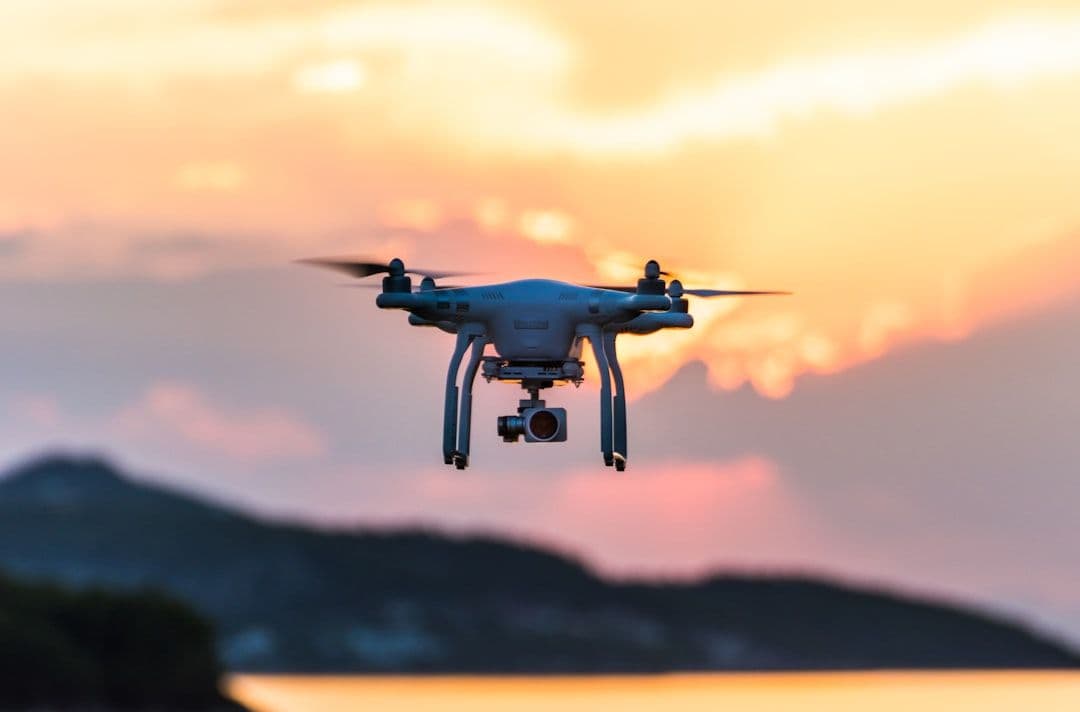
When most people think of drones, they picture rotary-wing machines humming through the sky. But a quieter, wetter revolution has been underway beneath the surface. Underwater remotely operated vehicles (ROVs) — commonly called submersible or underwater drones — have been carving out an increasingly important role in inspection, aquaculture, marine research, and recreational exploration. Until recently, though, meaningful access came with a serious price tag and a steep learning curve.
The emergence of compact, affordable underwater drones like the BentiX is changing that equation. Understanding why this matters requires a look at what these devices do, where they've typically fallen short, and what opens up when the barriers come down.
What Underwater Drones Actually Do
An underwater drone is, at its core, a remotely piloted submersible fitted with a camera and a propulsion system. The operator typically controls it via a tethered cable (which transmits video and commands reliably underwater, where radio signals cannot penetrate) or, in more advanced systems, through acoustic communication links.
The use cases are genuinely broad:
- Hull and infrastructure inspection: Checking the underside of a boat, a pier, or a dam for corrosion, fouling, or structural damage — without deploying divers.
- Aquaculture monitoring: Scanning fish farm nets for tears, parasites, or debris in real time.
- Reef and marine wildlife observation: Documenting ecosystems with minimal disturbance, providing data for conservation researchers.
- Search and recovery: Locating submerged objects in lakes, rivers, or harbors.
- Recreational exploration: Giving curious people a live window into underwater environments they'd never otherwise see.
Traditionally, capable underwater ROVs capable of performing these tasks have weighed several kilograms, required dedicated power supplies, and cost anywhere from several thousand to tens of thousands of dollars — pricing out casual users and small operators entirely.
The Miniaturization Challenge
Shrinking an underwater drone is harder than shrinking an aerial one. The physics are more hostile. The device must be watertight under pressure, buoyancy-neutral or actively controlled, and powerful enough to fight currents — all while keeping electronics dry and camera optics clear. Every component adds weight and potential leak points.
Early compact underwater drones made compromises: limited depth ratings, poor maneuverability in current, short battery life, or video quality that left much to be desired. As materials science, miniaturized brushless motors, and efficient lithium battery chemistries have matured, however, engineers have gained the tools to build smaller, lighter, and more capable submersibles without gutting their functionality.
The BentiX represents the latest iteration of this trend — a small-form-factor underwater drone aimed squarely at making submersible exploration genuinely accessible. While full specifications remain to be confirmed in final production form, the device is positioned as a simple, approachable entry point: something you can take to a dock, a lake, or a coastal reef without specialized training or a support team.
Why Accessibility Is the Real Innovation
It's tempting to evaluate any new gadget purely on its spec sheet. But with underwater drones, the more profound shift happening is democratization. When a device is compact enough to pack in a backpack and affordable enough for an individual hobbyist, the number of people observing, documenting, and interacting with underwater environments grows dramatically.
That has tangible downstream effects:
- Citizen science scales up. Recreational users diving reef systems or riverbanks with affordable ROVs generate useful observational data that researchers can aggregate, supplementing expensive academic survey programs.
- Small boat owners get practical tools. A recreational sailor or a small charter operator can inspect their own hull without hauling out or hiring a dive team — saving money and catching problems early.
- Education opens up. Students studying marine biology, environmental science, or robotics gain hands-on access to real submersible hardware, not just simulations.
This mirrors a pattern already visible in aerial drones. Compact, affordable platforms like the DJI Mini 4 Pro and DJI Neo brought professional-quality aerial imaging to individuals and small businesses who would never have purchased enterprise-grade equipment. The underwater segment is following the same trajectory, just a few years behind.
What to Look for When Evaluating a Compact Underwater Drone
If the BentiX or devices like it are on your radar, a few technical factors are worth scrutinizing regardless of price point:
- Depth rating. Even casual use requires a meaningful depth ceiling. Shallow coastal and freshwater exploration sits in the 10–30 m range; anything deeper demands more robust pressure sealing.
- Tether length and management. A short tether limits exploration radius significantly. Look for how the tether is managed — poor cable design leads to tangles and lost vehicles.
- Thruster configuration. Three-dimensional maneuverability (forward, lateral, and vertical) requires multiple thrusters oriented on different axes. Simpler designs with fewer thrusters limit what you can do in current.
- Video quality and latency. High-resolution, low-latency live video is the primary user interface for any ROV. Lag makes precise maneuvering in tight spaces frustrating and risky.
- Battery life. Underwater motors work hard. Realistic endurance figures matter far more than headline specs in controlled conditions.
The Bigger Picture
Compact underwater drones sit at an interesting intersection of robotics, environmental technology, and consumer electronics. As sensors shrink, battery energy density improves, and manufacturing costs fall, the gap between "toy" and "capable tool" in the submersible space is narrowing fast.
For anyone curious about what lies beneath the surface — whether that's a marina, a mountain lake, or a coral reef — devices like the BentiX signal that the barrier to entry is lower than it has ever been. That's not just good news for hobbyists. It's good news for the oceans, too.
Interested in exploring drone technology above or below the waterline? Browse RobotWorld's full range of aerial and robotic platforms, or contact our team to discuss which solution fits your use case.
References
This article was drafted with AI assistance and reviewed before publishing.
Related reading
- Autonomous DrivingLucid and Bolt's 25,000-Robotaxi Plan: What It Means for the Future of Urban Mobility in Europe
- Autonomous DrivingWaymo's Robotaxis Roll Into Las Vegas: What It Means for Autonomous Mobility
- Autonomous DrivingWhy Tesla's Cybercab Bans Under-13 Riders — and What It Reveals About Autonomous Vehicle Design
- Autonomous DrivingTravis Kalanick's Atoms: The Robotaxi Comeback That Could Reshape Urban Mobility