
Elroy Air's $175 Million Funding Round: What It Means for Autonomous Cargo Drones
By RobotWorld·9/29/2026
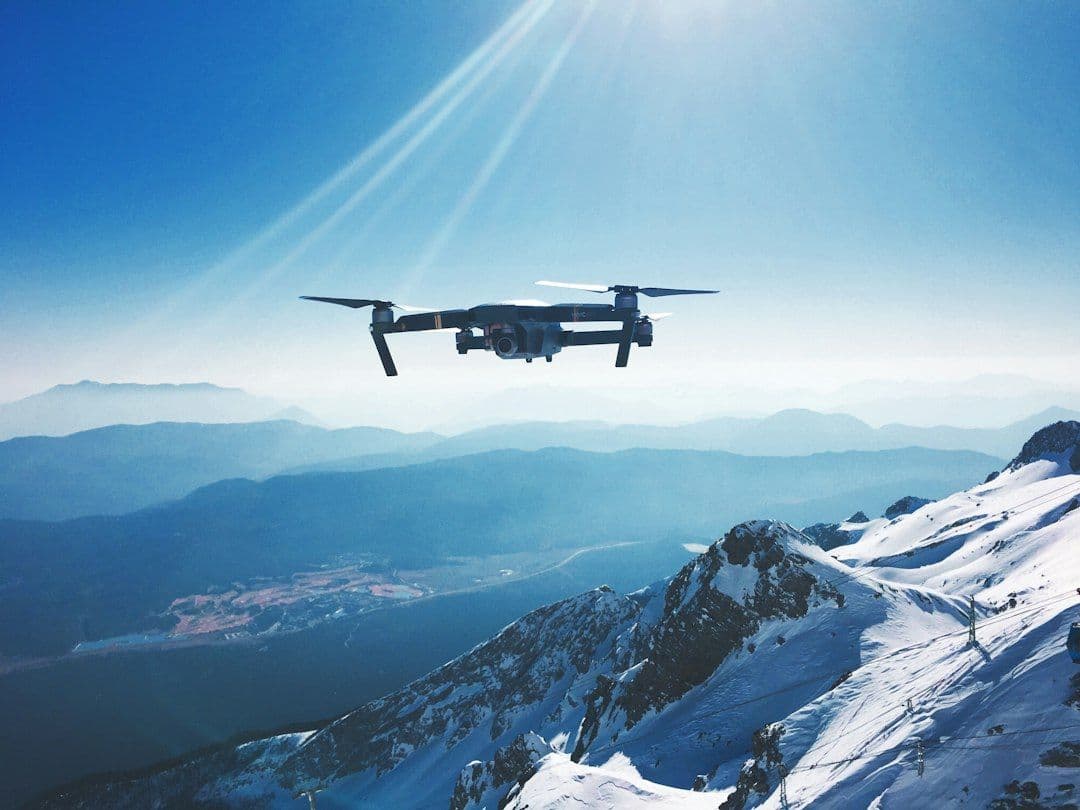
Autonomous cargo aviation just received a significant vote of confidence. Elroy Air, the California-based company developing the Chaparral uncrewed cargo aircraft, has expanded its private investment in public equity (PIPE) commitments to a total of $175 million — a landmark that positions the startup to move from prototype flights to full-scale manufacturing.
From Prototype to Production: A Critical Inflection Point
For any aerospace company, the leap from a working demonstrator to a certified, production-ready aircraft is arguably the hardest challenge in the industry. Engineering a drone that flies reliably is one thing; building the infrastructure, supply chains, quality systems, and regulatory pathways to produce dozens — or hundreds — of them per year is an entirely different discipline.
That is precisely why this funding round matters. The expanded PIPE commitments, which include continued participation from established investors such as Lockheed Martin Ventures and Inflection Point, signal that stakeholders with deep aerospace and financial expertise believe Elroy Air has crossed the threshold from promising technology to commercially viable product. With $75 million of the total already in hand ahead of the company's planned business combination with Inflection Point Acquisition Corp. VII, Elroy Air has real capital to deploy now, not just a promise on paper.
What Is the Chaparral?
The Chaparral is Elroy Air's flagship platform: a hybrid-electric vertical takeoff and landing (VTOL) cargo drone designed to carry meaningful payloads autonomously over ranges that make it genuinely useful for logistics networks. Unlike small consumer or enterprise drones, the Chaparral is targeting the "middle mile" of supply chains — the segment between regional distribution hubs and final-mile delivery points — where road transport is slow and crewed aviation is expensive.
The aircraft is designed to operate without a pilot on board, relying on onboard autonomy, sensor fusion, and flight management software to navigate, detect obstacles, and land at unprepared sites. This combination of vertical takeoff capability and autonomous operation is what makes VTOL cargo drones so compelling for logistics in areas with limited infrastructure: no runway required, no pilot on location.
Why Autonomous Cargo Aviation Is Having Its Moment
Several converging trends are accelerating investor and operator interest in platforms like the Chaparral:
- Supply chain resilience: The disruptions of recent years have pushed logistics operators to seek alternatives to road-dependent networks, particularly for time-sensitive cargo in remote or disaster-affected regions.
- Workforce constraints: Finding and retaining qualified pilots for routine cargo runs is increasingly difficult and expensive, making autonomous systems economically attractive at scale.
- Battery and hybrid-electric maturity: Improvements in energy density and hybrid powertrain efficiency have extended the practical range of electric VTOL aircraft to a point where commercial use cases are finally viable.
- Regulatory progress: Aviation authorities in the US and internationally are developing clearer frameworks for Beyond Visual Line of Sight (BVLOS) operations, which are essential for autonomous cargo drones to operate commercially at scale.
Elroy Air's timing aligns with this regulatory and technological maturation, which is likely part of what makes the current fundraise compelling to sophisticated aerospace investors.
The Role of Edge AI and Autonomy Hardware
Autonomous cargo aircraft like the Chaparral depend heavily on onboard computing to process sensor data, make navigation decisions, and respond to unexpected situations — all without relying on a continuous ground control link. This is where edge AI hardware becomes mission-critical.
High-performance, low-power compute platforms are essential for running the perception, planning, and control algorithms that keep an uncrewed aircraft safe in dynamic environments. The demand for this kind of embedded intelligence is one reason platforms like the NVIDIA Jetson AGX Orin 64GB have become reference hardware in the autonomous systems industry — delivering data-center-class inference capability directly on the vehicle, without cloud dependency.
For developers and researchers building toward autonomous aviation applications, understanding these edge computing architectures is increasingly foundational knowledge.
What Comes Next for Elroy Air
The business combination with Inflection Point Acquisition Corp. VII, once completed, would take Elroy Air public — providing access to additional capital markets and the reporting transparency that comes with public company status. The $175 million PIPE serves as a financial bridge and a signal of confidence to the broader market.
On the operational side, the priority is scaling manufacturing. Achieving meaningful production volumes requires hardening the supply chain for critical components, qualifying manufacturing processes for aerospace standards, and potentially expanding facility capacity. None of this is fast or cheap, which is why the size of this funding round is significant.
Commercially, Elroy Air has been working with logistics and humanitarian partners to define real-world use cases — from cargo delivery in Alaska's remote communities to humanitarian supply runs in areas where road access is unreliable. These pilot programs generate the operational data and customer validation that investors and regulators both want to see before broader deployment.
The Bigger Picture
Elroy Air's funding milestone is a data point in a larger pattern: serious capital continues to flow into autonomous logistics aviation, even as the industry navigates the long and complex path to regulatory approval and commercial scale. For the freight, logistics, and humanitarian sectors, the promise is significant — faster, cheaper, more resilient delivery of goods to places that are hard to reach.
The Chaparral is not the only autonomous cargo drone in development, but the scale of this funding round and the caliber of investors involved suggest it is one of the more credible bets on where autonomous middle-mile logistics is headed.
For those tracking frontier technology in aviation and logistics, Elroy Air's next milestones — production ramp, regulatory approvals, and first commercial contracts at scale — will be worth watching closely.
References
This article was drafted with AI assistance and reviewed before publishing.
Related reading
- Autonomous DrivingWhy Doug Field Joining Mind Robotics Is a Big Deal for Autonomous Vehicle AI
- Autonomous DrivingRobotaxis and School Zones: What the Federal Inquiry Into Tesla's AV Speed Violations Tells Us About Autonomous Driving's Hardest Problem
- Autonomous DrivingWhy a Key Regulatory Roadblock for Self-Driving Trucks Just Cleared — And What It Means for Autonomous Freight
- Autonomous DrivingRobotaxis Under the Microscope: Why Regulators Are Catching Up With Autonomous Vehicles