
India's Smartphone Manufacturing Boom Enters a New Phase: What the Vivo JV Means for the Industry
By RobotWorld·7/18/2026
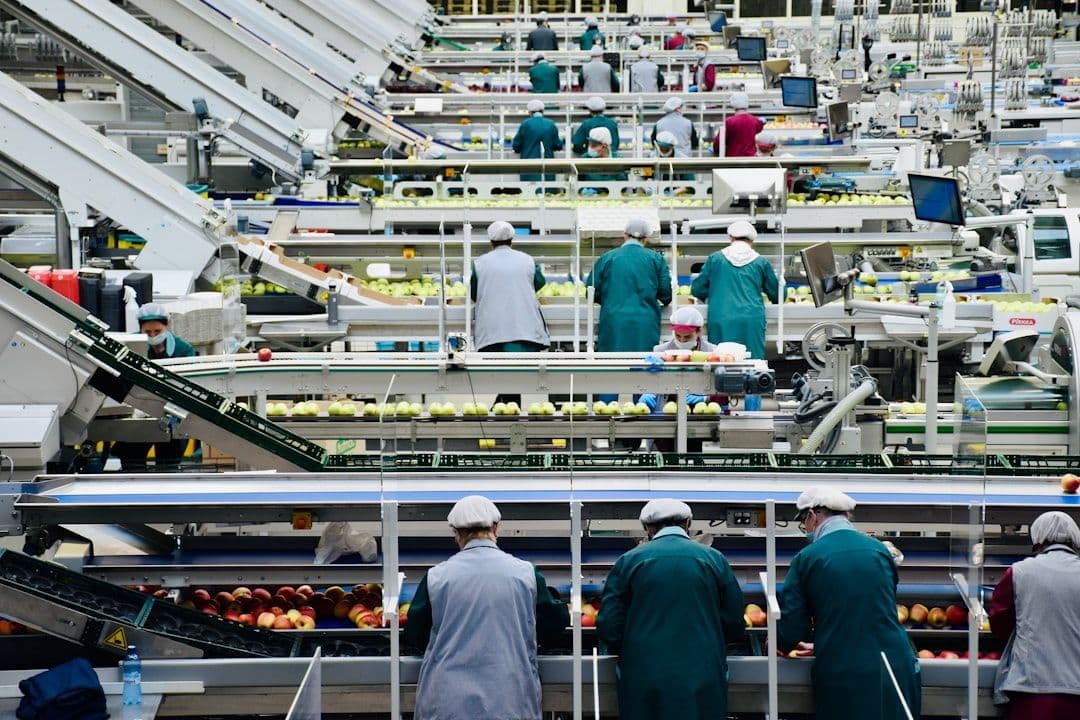
When Apple began shifting a meaningful share of iPhone production to India, it sent a signal the entire electronics industry heard. Now, with Vivo reportedly setting up a joint venture structure for its Indian operations, that signal has amplified — and the story is becoming considerably more complex.
From Assembly Hub to Strategic Anchor
India's rise as a smartphone manufacturing destination didn't happen overnight. It was shaped by a combination of government incentives — most notably the Production-Linked Incentive (PLI) scheme — rising labor competitiveness, and a geopolitical environment that made over-dependence on a single manufacturing geography increasingly risky for global brands.
Apple's partnership with Foxconn and Tata was the headline act, but it was always going to attract imitators. The more interesting question was always: how would Chinese brands navigate the same opportunity, given the added layer of India-China diplomatic tension?
The Vivo joint venture appears to be one answer. By structuring Indian operations through a local JV — rather than operating as a wholly foreign-owned subsidiary — Vivo is effectively localizing its corporate identity in India. This matters both regulatorily and reputationally. Indian partners bring local credibility, relationships with government stakeholders, and a stake in the venture's success that aligns incentives in ways a subsidiary model doesn't.
Why the JV Model Could Become a Template
For Chinese electronics makers eyeing India, the JV route is appealing for several reasons:
Regulatory navigation. India has tightened scrutiny on Chinese investment since 2020. A JV structure with a substantial Indian partner can help companies operate with greater confidence in a complex approval environment, though it doesn't eliminate scrutiny entirely.
Market access. India is not just a manufacturing base — it's one of the world's largest and fastest-growing smartphone markets. A company that manufactures in India gains proximity to that market, better supply chain responsiveness, and a stronger "Made in India" narrative with local consumers.
Risk distribution. Concentrating all manufacturing in China carries geopolitical and supply chain risks that have become undeniable. A JV in India allows brands to diversify without fully relinquishing operational control.
If Vivo's structure proves workable — commercially and regulatorily — it gives other Chinese brands a tested model to follow. That would accelerate India's evolution from a secondary assembly location into a genuine, multi-brand electronics manufacturing hub.
The Broader Supply Chain Transformation
What's easy to miss in the headline-level coverage is how deep the supply chain implications run. Final assembly is just the visible tip. For India to become a true manufacturing powerhouse in smartphones — rather than a screwdriver-assembly operation — it needs to develop depth in components: displays, semiconductors, camera modules, batteries, and the precision machinery used to make them all.
That's a longer journey. South Korea, Taiwan, and China each took decades to build that depth. India's PLI scheme is an attempt to accelerate the process by incentivizing not just assembly but component manufacturing. The Vivo JV, and ventures like it, creates demand signals that make investing in that local supply chain ecosystem more attractive.
For global technology companies, this matters beyond smartphones. The same infrastructure — skilled workers, logistics networks, component suppliers, quality control systems — that supports smartphone manufacturing also underpins the production of edge computing hardware, industrial sensors, robotics components, and AI-enabled devices. As the frontier technology industry grows, so does its dependence on resilient, geographically diversified manufacturing.
What This Means for Tech Buyers and Businesses
For enterprises sourcing electronics — whether consumer devices, industrial tablets, or embedded computing hardware — India's manufacturing expansion offers a meaningful diversification in their supply chains over the coming years. Products assembled or sourced partly from Indian facilities may carry different lead times, cost structures, and geopolitical risk profiles than those sourced exclusively from China.
For technology developers building on edge AI platforms, robotics systems, or autonomous devices, the evolution of India's manufacturing ecosystem is worth watching. As component supply chains deepen and localize, the cost and availability profiles of complex hardware — from camera modules to compute boards — may shift in ways that benefit global buyers.
The Road Ahead
India's smartphone manufacturing story is still being written. The Vivo JV is an important data point, but the real test is execution: whether joint ventures can navigate regulatory complexity, whether component ecosystems mature, and whether India can sustain the policy consistency that investors need to commit capital at scale.
What's clear is that the phase Apple helped inaugurate — proving that high-quality, high-volume consumer electronics could be made in India — is now giving way to something more ambitious. Multiple global brands are now competing to shape what comes next, and the JV model may be the key that unlocks the next chapter.
For anyone tracking global supply chains, frontier hardware, or the geopolitics of technology manufacturing, this is a space worth watching closely.
References
This article was drafted with AI assistance and reviewed before publishing.
Related reading
- Industry & TrendsAmazon's Smart Glasses for Delivery Drivers: How AI-Powered Wearables Are Reshaping Last-Mile Logistics
- Industry & TrendsSmart Glasses and Privacy: What Newsom's Veto Means for Wearable AI Tech
- Industry & TrendsWhy the $100 Laptop Dream Failed — and What It Teaches Us About Bridging the Digital Divide
- RoboticsFactory Robots That Retrain in Minutes: What Industrial Next Is Changing About Flexible Automation