
Inside Europe's Drone Manufacturing Boom: What ABZ Innovation's New Hungary Facility Means for the Industry
By RobotWorld·9/19/2026
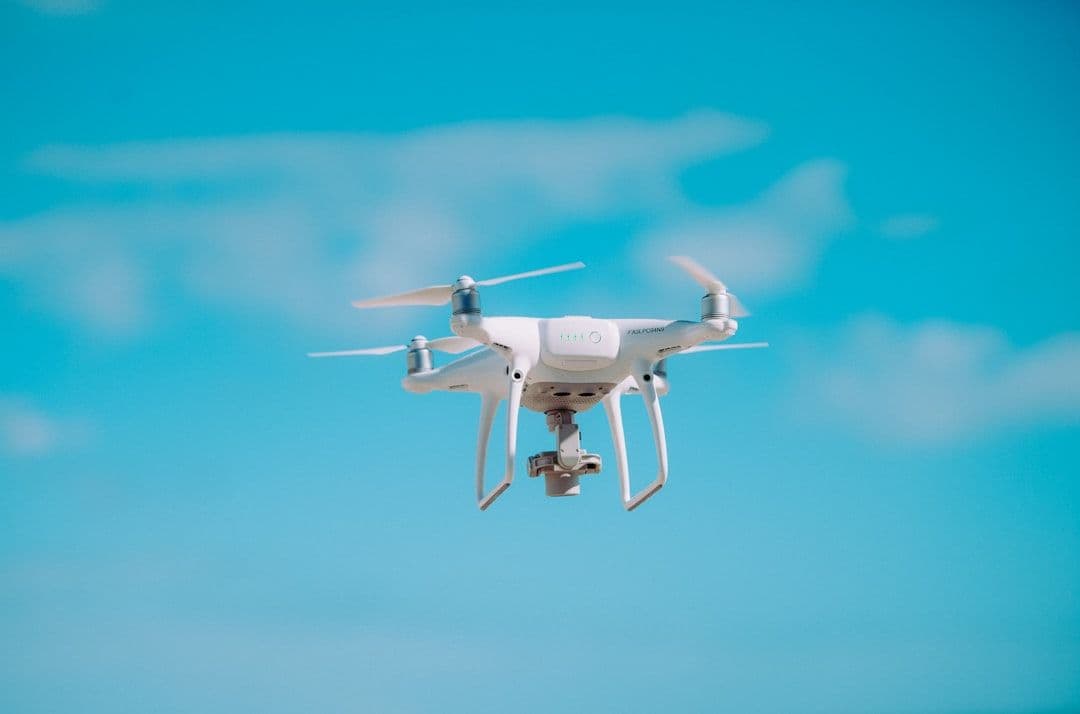
A significant milestone just landed on the European drone manufacturing map. ABZ Innovation has officially inaugurated a large-scale production facility in Szentendre, Hungary — a site the company describes as one of the biggest dedicated civilian drone manufacturing hubs on the continent. For an industry that has long leaned heavily on Asian supply chains, this development is worth unpacking.
Why Civilian Drone Production Is Scaling Up in Europe
The timing of this expansion is no accident. Across Europe, regulatory frameworks for unmanned aerial systems are maturing rapidly, with the European Union Aviation Safety Agency (EASA) having established clearer operational categories that give commercial operators the confidence to invest. As rules around Beyond Visual Line of Sight (BVLOS) flight, automated operations, and urban air mobility become more defined, the business case for large-scale drone deployment grows significantly stronger.
At the same time, several commercial sectors are actively pulling demand forward. Agricultural spraying and spreading, infrastructure inspection, industrial cleaning of hard-to-reach structures, and last-mile cargo logistics are all areas where drone technology is moving from pilot project to operational backbone. Having a robust local manufacturing base matters for lead times, supply chain resilience, and the ability to customize platforms quickly for European market needs.
What Szentendre Represents Strategically
ABZ Innovation's choice of Hungary is notable for several reasons. The country has an established aerospace and precision manufacturing ecosystem, a skilled technical workforce, and EU membership — which simplifies the movement of components and finished aircraft within the bloc. For European operators wary of extended procurement timelines or geopolitical supply chain disruption, sourcing from within the EU carries real operational and compliance advantages.
A large dedicated facility, rather than a shared or contract manufacturing arrangement, also signals a long-term commitment to volume production. It suggests ABZ Innovation anticipates that demand for its platforms — across agriculture, industry, and logistics — will continue to expand at a pace that justifies significant capital investment.
The Applications Driving This Demand
To understand why a factory of this scale makes sense, it helps to look at the concrete applications pulling drone hardware into commercial use:
Agriculture: Precision drone spraying is arguably the most mature large-scale commercial drone application globally. Platforms purpose-built for this work — capable of carrying large liquid payloads and autonomously navigating crop rows — are seeing rapid uptake across European farmland as labour costs rise and regulatory approvals arrive. The DJI Agras T50, for example, illustrates how sophisticated agricultural drones have become, combining large spray tanks, dual atomizing sprinklers, and onboard radar-plus-vision sensing for autonomous terrain-following at high coverage rates.
Industrial Inspection: From wind turbine blades to power line corridors, petrochemical facilities, and large civil structures, inspection drones are displacing rope-access teams and reducing risk. Enterprise platforms like the Autel EVO Max 4T — with its thermal imaging, high-zoom optics, and laser rangefinder — show how much sensing capability can now be packed into a foldable airframe. For inspectors, the data quality and safety benefits are compelling.
Cargo and Logistics: Short-haul drone delivery is transitioning from concept to commercial service in multiple European markets. Dedicated cargo drones, designed for repeatability, payload reliability, and automated flight management, require consistent manufacturing quality at scale — precisely what a purpose-built facility can deliver.
Industrial Cleaning: High-reach cleaning of facades, solar panels, and industrial equipment is an emerging niche where drone platforms — often equipped with pressurized spray systems — are replacing costly elevated work platforms.
The Broader Context: European Drone Sovereignty
ABZ Innovation's expansion fits into a wider European push for greater technological sovereignty in critical sectors. In drones specifically, the EU has been actively encouraging local development and manufacturing capacity, both to reduce dependency on non-European suppliers and to ensure that civilian drone infrastructure is built on hardware designed with European regulatory and safety standards in mind.
This matters because as drones become embedded in critical supply chains — food production, energy infrastructure, logistics networks — the provenance and security of the platforms themselves becomes a legitimate consideration for enterprise buyers and public sector operators alike.
What to Watch Next
The Szentendre facility is a production hub, not just an assembly line, which implies vertical integration of key components. As the facility ramps up, the critical metrics to follow will be: how quickly ABZ can scale unit output to meet commercial demand, whether the cost structure of European-manufactured platforms becomes competitive with imported equivalents, and how rapidly the company can iterate hardware designs as EASA regulations evolve.
For the drone industry broadly, this is a signal that European commercial drone manufacturing is entering a new phase — one defined less by prototypes and more by production volume, application specialization, and the kind of supply chain reliability that large enterprise customers require before committing to drone-based operations at scale.
The skies above European farms, industrial sites, and logistics corridors are getting busier. The factories producing those aircraft are now growing to match.
Interested in exploring enterprise drone and robotics platforms for your operation? Browse our full range of commercial UAVs and autonomous systems at RobotWorld.
References
This article was drafted with AI assistance and reviewed before publishing.
Related reading
- DronesHow Drone Training Programs Actually Work: Lessons from Large-Scale Field Exercises
- DronesDrone Compliance Is Broken. Could AI Finally Fix It?
- DronesWhy Drones Need to Be Seen: Remote ID, Airspace Awareness, and the Growing Infrastructure Imperative
- DronesWhen Drones Go Wrong: What a UK Police Incident Teaches Us About Airspace Safety