
Inside the Custom Silicon Powering Waymo's Robotaxi Fleet
By RobotWorld·8/24/2026
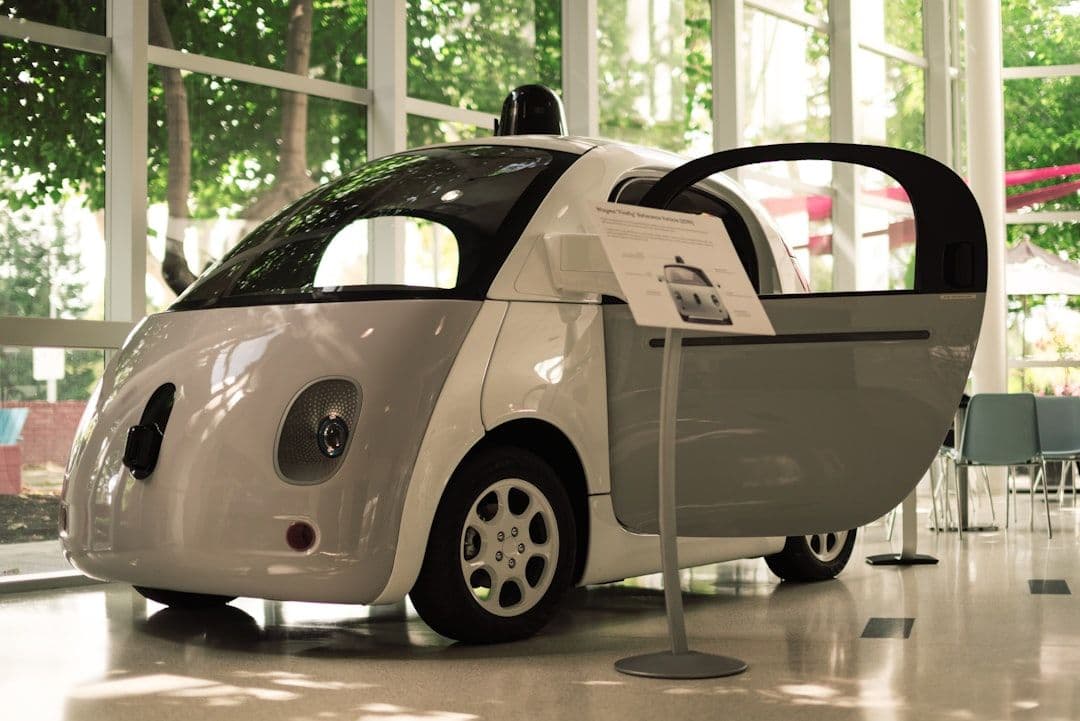
Autonomous vehicles have always been a hardware problem as much as a software one. You can train the world's most sophisticated driving AI, but if the chip running it can't process sensor data fast enough, the car still can't react in time. That's the fundamental challenge Waymo has been working to crack — and its answer is custom silicon designed from the ground up for robotaxi operations.
Why Off-the-Shelf Chips Fall Short
General-purpose processors and even high-end graphics cards weren't built with autonomous driving in mind. They're optimized for broad workloads, which means they carry a lot of computational overhead that a self-driving car simply doesn't need — while simultaneously lacking the specific capabilities it does.
A robotaxi needs to fuse data from multiple LiDAR units, radar arrays, and high-resolution cameras simultaneously, run real-time object detection and trajectory prediction, and make safety-critical decisions — all within milliseconds, continuously, for hours at a time. Doing this on generic hardware is both power-hungry and inefficient. Heat becomes a problem. Latency becomes a problem. Reliability over long duty cycles becomes a problem.
Custom chips solve this by hardwiring the exact computational pathways a self-driving system actually uses. Unnecessary silicon is eliminated; critical pathways are accelerated. The result is faster inference, lower power draw, and more predictable performance — exactly what a vehicle operating in dense urban traffic demands.
What "Purpose-Built" Actually Means
When a company like Waymo designs its own chip — sometimes called an Application-Specific Integrated Circuit (ASIC) or a domain-specific accelerator — it's essentially encoding its own software architecture into hardware. The neural network models used for perception and prediction inform the chip's internal data flow, memory hierarchy, and processing units.
This is a significant undertaking. Chip design requires deep semiconductor expertise, substantial capital investment, and multi-year development cycles. The fact that Waymo has committed to this path signals strong confidence in its long-term roadmap — and a desire to remove dependency on third-party hardware suppliers whose roadmaps may not align with autonomous driving needs.
It also creates a meaningful competitive moat. A rival can copy a software algorithm, but replicating a custom chip takes years and hundreds of millions of dollars.
The Broader Trend: Vertical Integration in AI Hardware
Waymo isn't alone in this strategic direction. Across the AI industry, leading companies have concluded that controlling their own silicon is essential to controlling their own destiny. The reasoning is consistent: when your product's performance is ultimately bound by a chip, owning that chip is owning your competitive ceiling.
For autonomous vehicles specifically, the stakes are even higher because safety is non-negotiable. A chip that's purpose-built for your exact sensor suite and software stack can be validated more thoroughly than a general component. Edge cases — the scenarios that matter most in safety certification — can be stress-tested at the hardware level.
This mirrors what's happening across the broader robotics and edge AI landscape. Platforms like the NVIDIA Jetson AGX Orin represent the state of the art in off-the-shelf edge AI compute, delivering up to 275 TOPS in a compact module — and they're already transforming what's possible for autonomous machines, multi-camera perception systems, and industrial robots that need data-center-class inference on-device. For developers and researchers building toward autonomous systems, such platforms offer a powerful on-ramp. But for a company operating a commercial robotaxi fleet at scale, even best-in-class general hardware eventually gives way to the appeal of something purpose-built.
What This Means for the Robotaxi Industry
Waymo's custom chip ambitions reflect a maturation of the autonomous vehicle space. The early years were dominated by software breakthroughs — better perception models, smarter path planning, richer simulation environments. Now the frontier is increasingly about systems-level efficiency: how well the software and hardware co-evolve.
For competitors, this raises the bar significantly. Startups and automotive OEMs building autonomous systems on commodity hardware may find themselves at a structural disadvantage as Waymo's vertically integrated stack compounds advantages over time — better performance per watt, tighter sensor-to-decision latency, and faster iteration on the hardware-software interface.
For passengers, the practical benefit is a smoother, more reliable ride experience and a fleet that can operate more cost-effectively at scale — which is ultimately what makes the robotaxi business model viable.
The Road Ahead
Custom silicon is not a shortcut. It's a long-term investment that requires a company to have enough clarity about its own system architecture to commit it to hardware — an architecture that will be difficult to change once the chips are fabricated. That's a calculated bet, and it signals that Waymo believes its core approach to autonomous driving is mature enough to crystallize in silicon.
Whether that bet pays off will depend on how well real-world fleet performance reflects the chip's design assumptions. But the direction is clear: the next era of autonomous vehicles will be defined not just by who has the best AI models, but by who has built the most tightly integrated hardware to run them.
For anyone building in the robotics and autonomous systems space — from researchers experimenting with platforms like the NVIDIA Jetson Orin Nano Super Developer Kit to engineers scaling commercial deployments — the Waymo silicon story is a preview of where the entire industry is heading.
Interested in exploring edge AI platforms for your own autonomous systems or robotics projects? Browse RobotWorld's range of AI compute and robotics hardware, or get in touch with our team for guidance on the right solution for your application.
References
This article was drafted with AI assistance and reviewed before publishing.
Related reading
- Autonomous DrivingWhy Doug Field Joining Mind Robotics Is a Big Deal for Autonomous Vehicle AI
- Autonomous DrivingRobotaxis and School Zones: What the Federal Inquiry Into Tesla's AV Speed Violations Tells Us About Autonomous Driving's Hardest Problem
- Autonomous DrivingWhy a Key Regulatory Roadblock for Self-Driving Trucks Just Cleared — And What It Means for Autonomous Freight
- Autonomous DrivingRobotaxis Under the Microscope: Why Regulators Are Catching Up With Autonomous Vehicles