
Meta's Humanoid Robot Ambitions: What "Max" Means for the Future of Home Robotics
By RobotWorld·11/2/2026
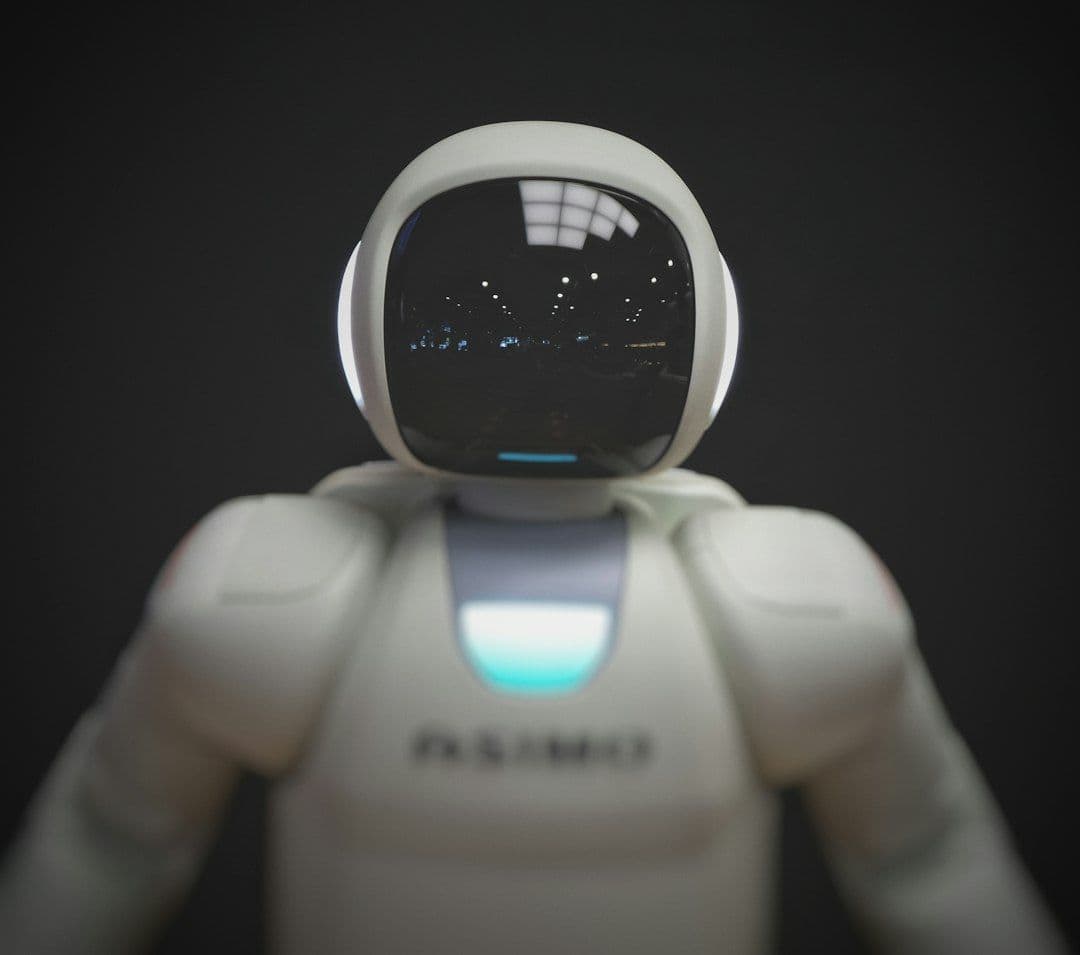
The race to put a humanoid robot in your home just got a high-profile new entrant. Reports indicate that Meta has quietly built a working prototype of a humanoid robot designed to handle everyday household tasks — and the company is already deep into development of a second, more advanced version, internally codenamed Max 2. For a company best known for social media and mixed-reality headsets, this is a striking pivot into physical AI. But in the broader context of robotics, it's also a logical next step.
Why Tech Giants Are Betting on Humanoids Now
The timing of Meta's reported push is not accidental. The robotics industry has reached an inflection point driven by three converging forces: dramatically cheaper actuators and sensors, far more capable AI models that can interpret unstructured environments, and growing investment confidence after a string of high-profile demonstrations from companies like Boston Dynamics, Figure, and Unitree.
The humanoid form factor, long dismissed as impractical, is now seen as strategically compelling precisely because homes and workplaces were built for human bodies. A robot that can open a standard door handle, pick up a dropped item, or load a dishwasher doesn't require any infrastructure changes — it just needs to be capable enough to navigate a space designed for people.
Meta's entry suggests the company sees embodied AI — AI that acts in the physical world, not just the digital one — as the next major computing platform, much as smartphones and AR glasses were seen in earlier cycles.
What Makes Household Manipulation So Hard
Moving a humanoid around a room is one challenge. Actually doing useful things with its hands is another altogether.
Household chores involve what roboticists call unstructured manipulation: picking up objects of arbitrary shape, weight, and texture; adapting grip force on the fly; recovering gracefully when something slips. For decades, these tasks have humbled even well-funded robotics programs. The kitchen, with its wet surfaces, floppy materials, and unpredictable layouts, is famously one of the hardest environments to automate.
Recent progress in imitation learning and reinforcement learning has begun to close this gap. Instead of hand-coding every movement, engineers now train robots by recording human demonstrations, then letting the robot practice thousands of variations in simulation before deploying in the real world. The result is manipulation policies that generalize better to real objects — though "better" is still relative, and robustness in a real home remains an open research problem.
Meta, with its vast AI research infrastructure and experience training large-scale models, is well-positioned to contribute to this training-data challenge. The reported progression from a first prototype to Max 2 suggests iterative hardware-software co-development — a pattern common in serious robotics programs, where early prototypes expose unexpected failure modes that reshape the next design entirely.
How This Fits the Competitive Landscape
Meta is entering a space that is already crowded but far from settled. Unitree's G1 humanoid, for instance, is an openly configurable platform targeting research and embodied AI development — demonstrating that capable bipedal hardware is now accessible beyond the largest labs. The Unitree G1 exemplifies this new accessibility: at 1.32 m tall with up to 43 degrees of freedom, it gives researchers a real platform to explore the kinds of whole-body manipulation policies that household tasks demand.
At the educational end, platforms like the Hiwonder TonyPi Pro — an 18-DOF humanoid built on Raspberry Pi 5 — let students and developers work hands-on with gait, balance, and vision in a humanoid form, building the intuitions that translate directly into understanding larger systems like Max.
What distinguishes the competitive players isn't just hardware — it's the AI stack. The robot that wins in the home won't necessarily be the most dexterous; it will be the one that best integrates perception, reasoning, and physical action into a reliable, safe loop. That's exactly where Meta's strengths in large language models and computer vision could prove decisive.
The Road to Your Living Room
It's worth being clear-eyed about timelines. Reports of impressive prototypes are a long way from a product you can buy and trust around children, pets, and breakable objects. Safety, reliability over thousands of cycles, and regulatory clarity all need to catch up with the hardware. Household robotics has seen ambitious announcements before that took years longer than expected — or stalled entirely.
That said, the acceleration is real. The jump from a first prototype to a second generation within a short window signals genuine momentum, not just a research curiosity. And when a company with Meta's resources commits to iterative hardware development, the learning curve tends to steepen quickly.
For engineers, educators, and tech enthusiasts watching this space, the humanoid moment is arriving faster than most predicted — and the platforms available today for experimentation and research are more capable and accessible than ever before.
Curious about exploring humanoid robotics or embodied AI on hands-on platforms? Browse our range of humanoid and advanced robotics kits, or get in touch with our team to find the right platform for your lab, classroom, or research project.
References
This article was drafted with AI assistance and reviewed before publishing.
Related reading
- RoboticsPhysical AI and the $1.45B Robotic Arm: Why Eka Robotics Is Turning Heads
- RoboticsRobot Vacuums Have a Privacy Problem — Here's What You Need to Know
- RoboticsOpenAI's Humanoid Robot: Why the Brain Is Harder Than the Body
- RoboticsFactory Robots That Retrain in Minutes: What Industrial Next Is Changing About Flexible Automation