
Travis Kalanick's Atoms: The Robotaxi Comeback That Could Reshape Urban Mobility
By RobotWorld·9/7/2026
The Return of a Ride-Hailing Visionary
Travis Kalanick didn't quietly fade into venture-capital obscurity after leaving Uber in 2017. His ghost kitchens venture, CloudKitchens, kept him busy for years — but the autonomous vehicle space, the very arena that consumed billions of Uber's dollars and triggered fierce political battles during his tenure, apparently never left his mind. Now, through his new company Atoms, Kalanick is said to be eyeing the robotaxi market, describing the venture as his opportunity to complete "unfinished business."
That phrase carries real weight. Under Kalanick, Uber invested heavily in self-driving technology, acquired the self-driving truck startup Otto, and clashed with Waymo in a high-profile trade-secrets lawsuit. The dream of eliminating the driver — and with it, the single largest cost in ride-hailing — was central to Uber's early identity. Kalanick never got to see that bet pay off. Now he wants another run at it.
What Is Atoms, and Why Does It Matter?
Atoms is still largely operating out of public view, which is characteristic of early-stage deep-tech ventures where premature disclosure can invite regulatory scrutiny and competitive imitation. What is known is that Kalanick has been building the company with ambitions that extend well beyond software — the name "Atoms" itself suggests an interest in the physical world, not just algorithms.
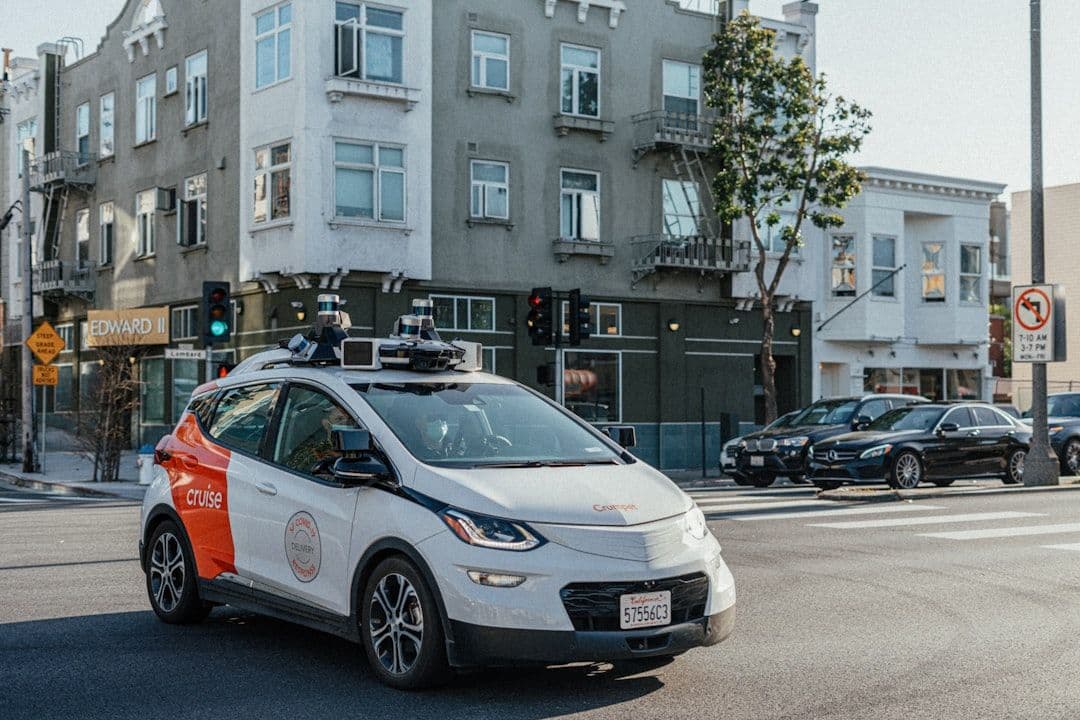
If Atoms does enter the robotaxi market, it would join a field that has matured considerably since Kalanick's Uber days. Waymo is now running fully driverless commercial services in several U.S. cities. Zoox (owned by Amazon) is developing purpose-built autonomous vehicles. Baidu's Apollo Go service has clocked millions of trips in China. The technical bar is extraordinarily high — and so is the capital requirement.
The Technical Stack Behind a Robotaxi
Building a competitive autonomous vehicle platform means solving an interconnected stack of hard problems simultaneously. Understanding these layers helps explain why so many well-funded companies have stumbled.
Perception is the foundation. A robotaxi must fuse data from multiple sensor modalities — cameras, LiDAR, radar, and ultrasonic sensors — to construct a real-time model of its environment. Each sensor has strengths and blind spots; the art is in the fusion algorithms that reconcile conflicting inputs under edge conditions like heavy rain, glare, or unpredictable pedestrian behavior.
Prediction and planning sit on top of perception. The vehicle must anticipate what every nearby object — cars, cyclists, children chasing a ball — is likely to do over the next several seconds, then calculate a safe and efficient path in real time. This is where modern AI, particularly transformer-based models trained on vast driving datasets, has made the most dramatic recent progress.
Edge compute is the hardware backbone. Running full perception-prediction-planning pipelines at the latency required for safe driving demands serious onboard processing — platforms like the NVIDIA Jetson AGX Orin represent the class of hardware developers use to prototype and validate these workloads, delivering data-center-class inference directly on the vehicle without cloud round-trips. At scale in a production fleet, purpose-designed compute chips typically take over.
HD mapping and localization give the vehicle centimeter-level awareness of where it sits relative to lane markings, curbs, and intersections — a layer above what GPS alone can provide.
Fleet operations and remote assistance round out the picture. Even the most capable autonomous systems today benefit from human supervisors who can intervene remotely in genuinely novel situations, an operational reality that adds significant infrastructure cost.
Why the Timing Is Interesting
The robotaxi landscape in 2024–2025 is at an inflection point. Waymo's public expansion is generating genuine consumer adoption data. Meanwhile, Tesla's "Full Self-Driving" ambitions have kept the category in the headlines, and Chinese EV manufacturers are aggressively integrating advanced driver assistance into mass-market vehicles. Public comfort with the concept of a driverless car is measurably higher than it was five years ago.
For a new entrant like Atoms, this cuts both ways. The market validation is real — but so is the lead that established players have built in miles driven, edge-case data, and regulatory relationships. Catching up requires either a differentiated technical approach, a geography-first strategy targeting less-contested markets, or a partnership model that leverages existing vehicle platforms rather than building from scratch.
Kalanick's background is fundamentally in marketplace design and operational scaling, not hardware engineering. If Atoms takes a software-and-operations angle — building the dispatch, routing, and customer experience layer while partnering with vehicle manufacturers — that would be a strategically coherent play.
What This Means for the Broader Robotics Ecosystem
The robotaxi push, whoever ultimately wins it, has spillover effects across the entire autonomous systems industry. Advances in sensor fusion, edge inference, and real-time mapping are already migrating into quadruped robots, autonomous logistics platforms, and industrial inspection systems. The engineering talent, datasets, and compute architectures developed for self-driving vehicles are becoming foundational infrastructure for the broader field.
For anyone building or studying autonomous systems today — whether it's a research team working with a platform like the Unitree B2 for field navigation, or developers prototyping perception pipelines on compact edge AI hardware — the robotaxi race is both a proving ground and a talent magnet that shapes the direction of the entire industry.
The Bottom Line
Atoms remains more question mark than announced product. But Travis Kalanick entering the robotaxi space — with the experience, capital network, and frankly the personal motivation he brings — is not a development the industry will ignore. Whether it represents a genuine second act or an expensive lesson in how much the field has changed, the attempt will generate data, competition, and possibly innovation that benefits the autonomous mobility space as a whole. In frontier technology, that's rarely a bad thing.
Curious about the AI compute and robotics platforms powering the next wave of autonomous systems? Explore RobotWorld's hardware lineup to find the right development foundation for your projects.
References
This article was drafted with AI assistance and reviewed before publishing.
Related reading
- Autonomous DrivingHow Reliable Robotics Is Quietly Rewriting the Rules of Autonomous Aviation
- Autonomous DrivingWhy Cities Are Putting the Brakes on Robotaxis — and What It Means for Autonomous Vehicles
- Autonomous DrivingThe 'Self-Driving Company': What AI Agentic Automation Really Means for the Future of Work
- Autonomous DrivingWhy "Full Self-Driving" Still Requires a Fully Awake Driver