
What the Texas Tesla Crash NTSB Finding Tells Us About Autopilot, Driver Data, and the Future of AV Safety
By RobotWorld·7/21/2026
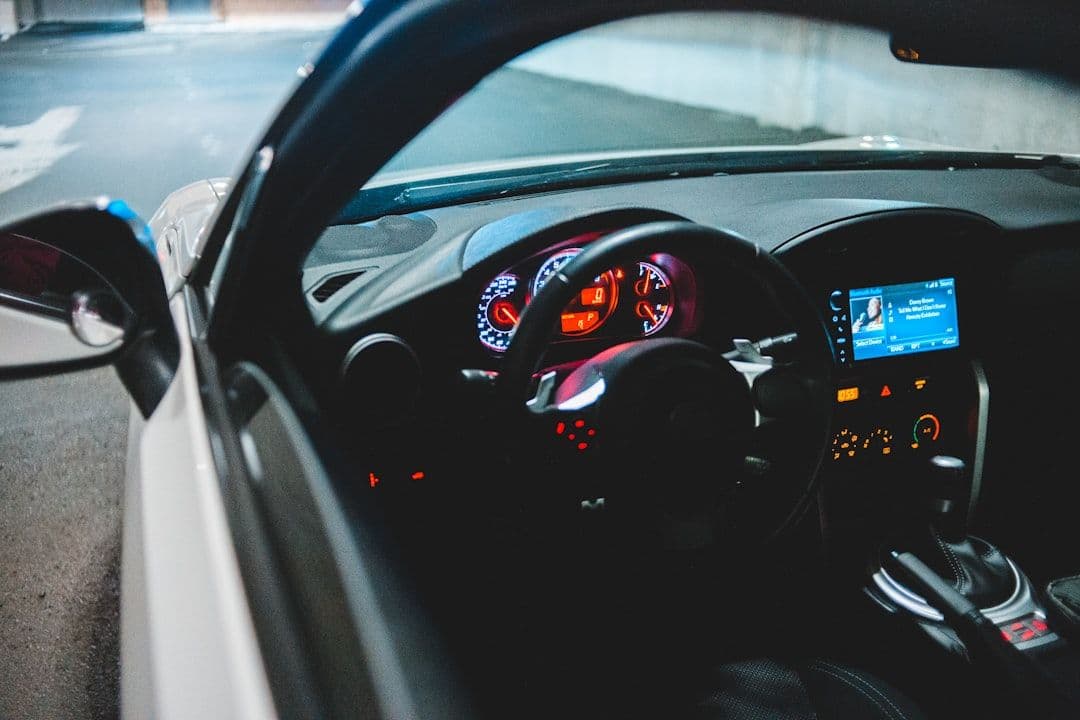
The National Transportation Safety Board (NTSB) has confirmed a key detail in a fatal Tesla crash in Texas: the driver pressed the accelerator pedal to 100% before the collision. This finding aligns with data Tesla itself released in the days immediately following the incident — and it opens up a broader, important conversation about how vehicles record and report driver behavior, what that means for accountability, and where the autonomous vehicle (AV) industry goes from here.
What the Data Actually Shows
Modern vehicles — particularly those with advanced driver-assistance systems (ADAS) like Tesla's Autopilot — are essentially rolling data loggers. Every pedal input, steering angle, speed, and system state is recorded in what's known as an Event Data Recorder (EDR), sometimes called a "black box" by analogy to aviation.
In this case, the EDR data showed the driver applied full throttle — 100% accelerator input — rather than the brake. The NTSB's independent analysis confirmed what Tesla had already published, which is a notable moment of data alignment between an automaker and a federal safety regulator. It doesn't resolve every question about the crash, but it does answer a specific factual one: what the driver's inputs were in the moments before impact.
This kind of granular telemetry is increasingly central to crash investigations. Where eyewitness accounts can be unreliable and physical evidence ambiguous, vehicle data provides a timestamped, sensor-verified record of events.
Why This Matters Beyond One Crash
The significance here isn't just about a single incident. It touches on several fault lines running through the broader autonomous and semi-autonomous vehicle space:
1. Driver Responsibility vs. System Responsibility
One of the most contested questions in AV incidents is where human error ends and system failure begins. ADAS like Autopilot are driver-assistance tools — they are designed to support a human driver, not replace attentiveness. When data confirms a driver made a specific, forceful physical input (flooring the accelerator), it shifts the accountability picture significantly. That said, investigators always examine whether the system's design, feedback mechanisms, or interface contributed to driver confusion or misuse.
2. Transparency and Trust
Tesla's decision to release vehicle data quickly — before the NTSB issued its findings — was unusual in the industry. Some praised it as transparency; others raised questions about data access and who controls it. EDR data is technically owned by the vehicle owner in most U.S. jurisdictions, but automakers, insurers, and regulators all have established pathways to access it in crash investigations. As vehicles become more software-defined, the question of data ownership and disclosure will only intensify.
3. The Role of Human Oversight in Semi-Autonomous Systems
This incident reinforces a core principle that safety engineers stress repeatedly: Level 2 automation requires continuous, active human supervision. Tesla's Autopilot, like most commercially available ADAS today, operates at SAE Level 2 — meaning the human must remain in control and ready to intervene at all times. The system can assist with steering and speed management, but it is not designed to override a deliberate human input like flooring the accelerator.
This is a genuine challenge for the industry. Research consistently shows that automation can induce complacency — drivers may become less attentive precisely because the system is handling routine driving. Designing interfaces that keep drivers appropriately engaged, without causing frustration or alert fatigue, remains an open engineering problem.
What Comes Next for AV Safety Standards
The NTSB doesn't have regulatory enforcement power — it issues findings and recommendations, which the National Highway Traffic Safety Administration (NHTSA) can then act on. Over recent years, the NTSB has repeatedly called for stronger federal standards around ADAS, including better driver monitoring systems that use cameras or sensors to verify that a human is paying attention, not just that their hands are on the wheel.
Several automakers are already moving in this direction, incorporating interior cameras that watch for eye gaze and head position. Regulators in the EU have mandated driver monitoring systems for new vehicle type approvals, and the U.S. is gradually following.
For edge AI and robotics developers watching this space, the technical challenge is instructive: reliable human-machine interaction requires sensing not just what a person does, but whether they are genuinely engaged. Platforms capable of running sophisticated perception models on-device — like the NVIDIA Jetson AGX Orin 64GB for high-throughput inference or the more accessible NVIDIA Jetson Orin Nano Super Developer Kit for prototyping — are exactly the kind of hardware enabling researchers to build and test next-generation driver monitoring and situational awareness systems without relying on cloud connectivity.
The Bigger Picture
The Texas crash confirmation is a data story as much as a safety story. It illustrates how the proliferation of onboard sensors and logging systems is fundamentally changing crash investigation, liability determination, and system design feedback loops. Every confirmed finding — whether it points to driver error, system malfunction, or a combination — feeds back into engineering decisions that shape the next generation of vehicles.
The path to genuinely autonomous vehicles is long, and the honest lesson from incidents like this isn't that the technology is categorically dangerous — it's that the handoff between human and machine is the hardest problem to solve. Getting that interface right, backed by rigorous data and independent oversight, is what will ultimately determine how safely the industry navigates that transition.
Interested in edge AI platforms for robotics and autonomous systems research? Explore our hardware lineup or get in touch with our team to discuss your application.
References
This article was drafted with AI assistance and reviewed before publishing.
Related reading
- Industry & TrendsAmazon's Smart Glasses for Delivery Drivers: How AI-Powered Wearables Are Reshaping Last-Mile Logistics
- Industry & TrendsSmart Glasses and Privacy: What Newsom's Veto Means for Wearable AI Tech
- Industry & TrendsWhy the $100 Laptop Dream Failed — and What It Teaches Us About Bridging the Digital Divide
- RoboticsFactory Robots That Retrain in Minutes: What Industrial Next Is Changing About Flexible Automation