
When Robots Enter the Ring: What California's Crackdown on Human-vs-Robot Fights Tells Us About Humanoid Technology
By RobotWorld·10/9/2026
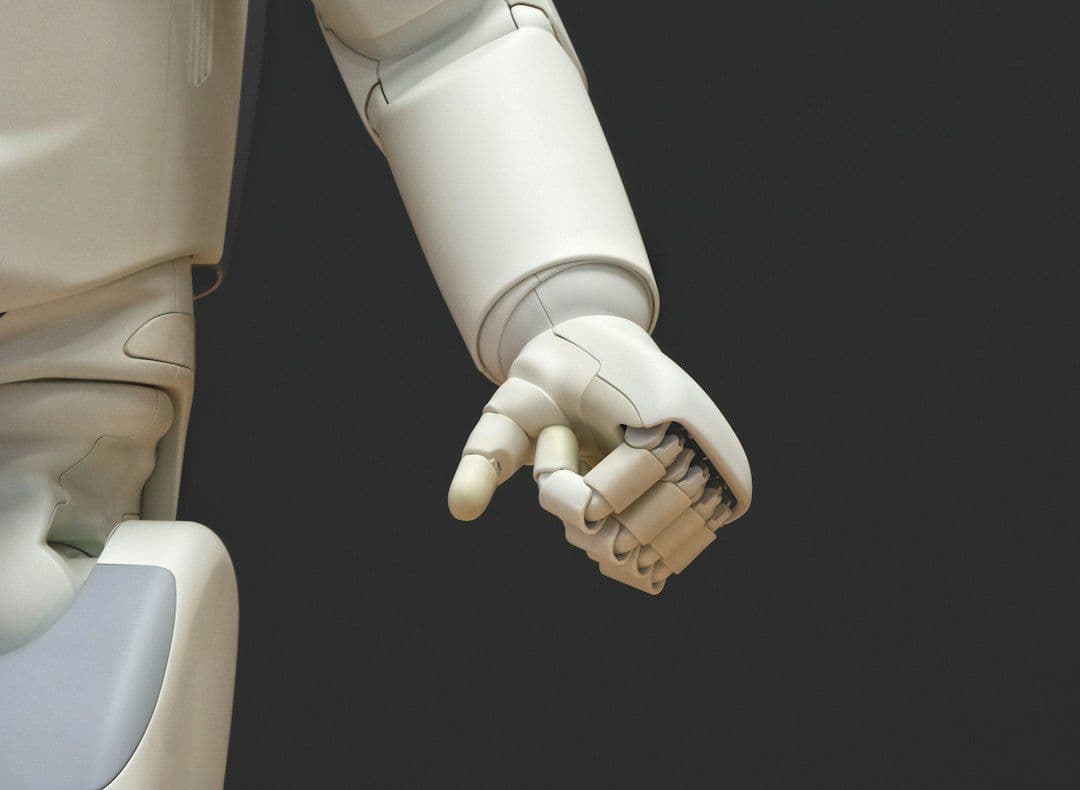
A startup called Rek recently made headlines for something most people assumed was still science fiction: staging a live match between a human and a humanoid robot. The event, held in September, saw a person named Frankie LaPenna square off against one of Rek's machines in what the company framed as an entertainment spectacle. California's State Athletic Commission wasn't amused. The regulator issued a cease-and-desist letter, signaling that — whatever the legal gray area around robot-on-human "combat sports" might be — state authorities intend to treat the public safety implications seriously.
The story is easy to dismiss as a quirky stunt. But step back, and it raises genuinely important questions about humanoid robot capability, public perception, and the responsible path forward for a technology that is developing faster than most people realize.
How Capable Are Humanoid Robots Right Now?
The short answer: more capable than they were two years ago, but still far from the autonomous, self-directed machines of popular imagination.
Today's leading humanoid platforms — including open research robots like the Unitree G1 — are sophisticated enough to walk, balance on uneven surfaces, perform repetitive manipulation tasks, and even demonstrate rudimentary learned behaviors through reinforcement training. The Unitree G1, for instance, stands around 1.32 m tall, carries up to 43 degrees of freedom, and is designed explicitly as a configurable platform for robotics research and embodied AI development. It represents the current frontier of accessible humanoid hardware.
But "capable in a lab" and "capable in an uncontrolled physical confrontation with a human" are very different things. Modern humanoids rely heavily on pre-programmed routines, carefully calibrated environments, and real-time compute. Their locomotion controllers are engineered for stability and task completion — not for unpredictable physical contact scenarios. The edge AI hardware powering these systems, such as modules delivering tens to hundreds of trillions of AI operations per second, is designed for perception and motion planning, not for the chaotic physics of physical combat.
In other words, what happened at Rek's event was almost certainly more theatrical than technical — a demonstration of a robot executing scripted or teleoperated movements, not a machine autonomously "fighting" a human.
Why Regulators Are Paying Attention
California's Athletic Commission oversees combat sports to ensure participant safety. Their concern isn't irrational: a humanoid robot, even a relatively modest one, involves rigid metal frames, powerful servo motors, and joint actuators that can exert significant force. If a machine were to fall, misfire a movement, or behave unexpectedly in proximity to a human body, injuries could occur regardless of intent.
There's also a precedent problem. If human-vs-robot spectacles become commercially viable entertainment, who sets the safety standards? Traditional sporting regulations were written for human athletes. There's no existing framework that clearly covers what happens when one "competitor" is made of aluminum and driven by a neural network.
This regulatory gap mirrors challenges across robotics more broadly. Autonomous vehicles, delivery robots, and quadrupeds operating in public spaces have all encountered similar friction as they outpace the rule books designed for a pre-robot world.
The Real Opportunity: Constructive Applications
Here's the more important takeaway for anyone following humanoid technology: the hype around robot "fights" distracts from the genuinely transformative applications that humanoid and advanced robotic platforms are being built for.
Humanoid form factors are valuable precisely because the world is built for humans. A robot that can walk on two legs, use its hands, and navigate human-scale environments can work in factories, warehouses, hospitals, and construction sites without requiring those spaces to be redesigned. Research platforms like the Unitree G1 exist so that engineers can develop and test the locomotion algorithms, manipulation skills, and AI inference pipelines that will eventually power those real-world deployments.
On the quadruped side, platforms like the Unitree Go2 and the Unitree B2 are already being deployed in inspection and logistics roles — navigating terrain that wheeled vehicles can't handle, carrying sensors into hazardous environments, and operating with minimal human supervision.
Meanwhile, the education pipeline feeding the next generation of robotics engineers runs through accessible platforms: humanoid kits like the Hiwonder TonyPi Pro, which lets students explore gait, balance, and computer vision in a hands-on setting, or the Hiwonder SO-ARM101, an open-source six-axis arm aligned with shared research standards so student projects connect to real published work.
What This Moment Actually Signals
California's cease-and-desist is less a condemnation of humanoid robotics than a symptom of how quickly the technology has matured. A few years ago, staging a human-vs-robot match wouldn't have been plausible entertainment — the robots simply weren't convincing enough. The fact that it happened at all is, in a sideways way, a testament to how far the hardware has come.
The more useful conversation is the one this incident should prompt: as humanoid robots become more capable and more visible in public spaces, the industry, regulators, and the public need to build shared frameworks for safe deployment. That means clear safety standards for human-robot proximity, transparent communication about what robots can and cannot do autonomously, and a focus on applications that solve real problems.
Robots entering the ring as a stunt generates attention. Robots entering the warehouse, the hospital corridor, or the research lab generates progress.
Interested in exploring humanoid or quadruped robot platforms for research or education? Browse our range of robotics hardware and get in touch with our team for guidance on the right platform for your project.
References
This article was drafted with AI assistance and reviewed before publishing.
Related reading
- RoboticsFactory Robots That Retrain in Minutes: What Industrial Next Is Changing About Flexible Automation
- RoboticsBuilding Robots That Actually Help People: Lessons from Charlie Kemp and the Stretch Robot
- RoboticsWhen Robots Cry: Understanding Emotional Mimicry in Humanoid AI
- Autonomous DrivingWhy Doug Field Joining Mind Robotics Is a Big Deal for Autonomous Vehicle AI