
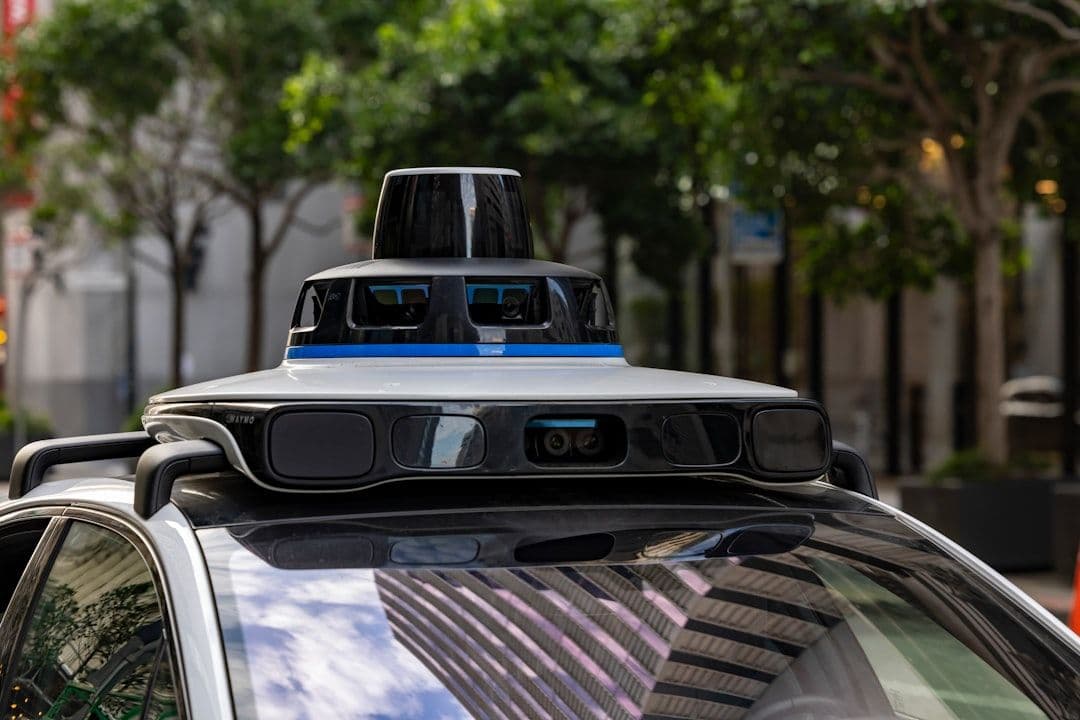
Luminar Iris
Luminar Iris is a semi-solid-state automotive LiDAR sensor operating at 1550 nm, designed for series-production passenger vehicles. It detects low-reflectivity objects at night up to 250 m away and delivers camera-like resolution across a wide field of view, supporting high-level autonomous driving and advanced driver-assistance systems.
- Scanning
- 2-axis scanning mirrors (semi-solid-state)
- Resolution
- over 300 points per square degree
- Wavelength
- 1550 nm fiber laser
- Field of View
- 120 x 28 degrees
Where to buy in Singapore
Automotive-grade sensing and compute is supplied to vehicle manufacturers under design-win programmes, in production volumes and with multi-year validation — it is not sold as individual units through resellers. Approach the manufacturer directly if you are specifying for a production programme.
We do not supply this product. It already has strong distribution in Singapore, and buying locally gets you local warranty and service that we could not match. We keep the page because the comparison is still useful.
Highlights
- ✓1550 nm enables long-range, low-reflectivity detection
- ✓Camera-like over 300 points/deg2 resolution
- ✓Beam-steering design without spinning the whole unit
- ✓Series-production automotive-qualified sensor
Overview
Overview
Luminar Iris is a semi-solid-state automotive LiDAR sensor engineered specifically for the constraints of series-production passenger vehicles — balancing size, weight, power consumption, cost, and long-term reliability. It was Luminar's first sensor refined for high-volume automotive deployment, entering low-volume production in 2022 and reaching high-volume production in 2024.
How It Works
Iris uses a 1550 nm fiber-laser as its light source and steers the laser beam using 2-axis scanning mirrors, rather than rotating the entire sensor unit. This approach — known as semi-solid-state scanning — reduces mechanical complexity while still covering a wide area.
The choice of 1550 nm wavelength is technically significant: light at this wavelength is absorbed by the eye's cornea before reaching the retina, which means higher optical power levels are permissible within established eye-safety limits. Higher transmitted power directly improves the sensor's ability to detect dark, low-reflectivity objects (such as a tire on a road, or dark clothing) at long distances and in low-light or nighttime conditions.
Performance Characteristics
- Detection range (night, low-reflectivity objects): up to 250 m
- Maximum scanning range: up to 600 m
- Resolution: more than 300 points per square degree
- Field of view: 120 × 28 degrees
The angular resolution of more than 300 points per square degree is described as camera-like — meaning the point cloud produced is dense enough to resolve object shape and detail at range, not just detect presence.
Real-World Applications
Iris is integrated into vehicles as part of advanced driver-assistance systems (ADAS) and higher-level autonomy stacks. Its long detection range and fine resolution are particularly relevant for highway driving scenarios, where vehicles travel at high speed and require early detection of hazards. The sensor's night performance addresses one of the core limitations of camera-only systems, which degrade significantly in low-light environments.
LiDAR at this performance level is typically used in combination with cameras and radar within a sensor-fusion architecture, where each modality compensates for the weaknesses of the others. Iris contributes precise depth and reflectivity data that cameras cannot directly measure.
Production Status
Luminar Iris entered low-volume series production in 2022 and high-volume series production in 2024, making it one of the few automotive-grade LiDAR sensors to have reached genuine volume manufacturing for passenger vehicle integration.
Specifications
| Scanning | 2-axis scanning mirrors (semi-solid-state) |
| Resolution | over 300 points per square degree |
| Wavelength | 1550 nm fiber laser |
| Field of View | 120 x 28 degrees |
| Max Scanning Range | Up to 600 m |
| Detection Range (night) | Up to 250 m |