
BVLOS Drone Deliveries Cleared in Zimbabwe: What the KITE UAS Approval Means for African Logistics
By RobotWorld·9/23/2026
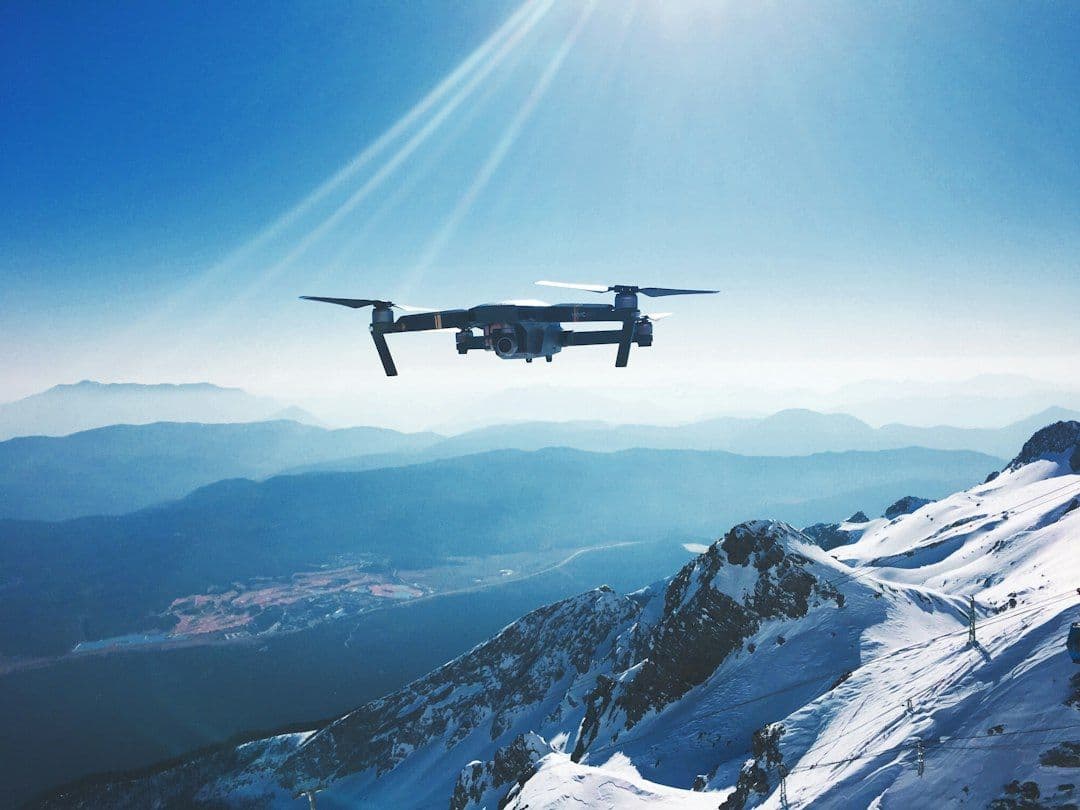
Zimbabwe has quietly become one of the more significant names in the global drone delivery story. Local operator Drone Solutions International (DSI) has received regulatory clearance from the country's Civil Aviation Authority to conduct beyond visual line of sight (BVLOS) commercial deliveries using the KITE uncrewed aircraft system, developed by Kite Aero. It's a development worth paying attention to — not just for what it means in Zimbabwe, but for what it signals about the trajectory of autonomous aerial logistics worldwide.
What Does "BVLOS" Actually Mean — and Why Is It Hard?
When a drone pilot flies in standard operations, regulations typically require the aircraft to remain within the pilot's direct, unaided line of sight. This keeps flights safe and relatively simple to manage, but it also imposes a hard ceiling on range and commercial viability. BVLOS — beyond visual line of sight — removes that constraint, allowing a drone to fly routes that extend far past what the human eye can track.
The challenge is that BVLOS flight demands a fundamentally different safety architecture. The aircraft must be capable of detecting and avoiding other air traffic, communicating reliably over long distances, maintaining accurate navigation without constant human correction, and responding autonomously to in-flight anomalies. Regulators must then be convinced that all of these systems work reliably enough in real-world conditions to permit operations over people, infrastructure, and uncontrolled airspace.
Getting that sign-off from a civil aviation authority is a non-trivial achievement. It typically requires extensive data collection during supervised trial flights, detailed safety cases, and ongoing coordination with air traffic management bodies. That's precisely why this Zimbabwe approval matters: it represents a regulator reaching sufficient confidence in both the operator and the aircraft to authorize unsupervised, extended-range flight.
The KITE UAS: Built for Range and Reliability
Kite Aero's KITE system is a fixed-wing uncrewed aircraft designed with logistics in mind. Fixed-wing platforms carry an inherent efficiency advantage over multirotor drones for long-distance missions: they generate lift aerodynamically rather than relying solely on thrust, which translates to meaningfully better energy consumption per kilometer traveled. This makes them well-suited to delivery routes that span tens of kilometers — exactly the kind of use case that matters in a country with vast rural areas and infrastructure gaps.
Rather than describe specific range or payload figures that we haven't independently verified, what's important to understand is the design philosophy: a fixed-wing BVLOS platform optimizes for covering ground efficiently while carrying commercially relevant payloads, whether that's medical supplies, agricultural inputs, or e-commerce parcels.
Why Africa Is a Compelling Testbed for BVLOS
It might seem surprising that some of the most progressive drone delivery approvals are emerging from African nations rather than from more established aviation markets. But the logic becomes clear when you consider the context.
Large parts of sub-Saharan Africa face genuine last-mile delivery challenges that aerial logistics can address directly. Road infrastructure in rural regions is often limited, seasonal flooding can cut off communities entirely, and cold-chain medical supply chains — for vaccines, blood products, and diagnostics — are difficult and expensive to maintain over ground routes. Drone delivery isn't a novelty in these markets; it's a practical infrastructure solution.
Rwanda pioneered this thinking by becoming one of the earliest nations to host commercial BVLOS drone operations for medical deliveries at scale. Zimbabwe's latest approval continues that regional trend, with regulators showing a willingness to adapt their frameworks to enable technology that delivers measurable public benefit.
What BVLOS Clearance Requires From an Operator
Receiving BVLOS approval isn't a one-time event — it's an ongoing relationship between an operator and its regulator. DSI will be required to maintain safety management systems, report incidents and anomalies, demonstrate continued airworthiness of its fleet, and likely operate within defined corridors or approved geographic areas. Expansion of those boundaries typically requires additional data and further regulatory engagement.
This is actually healthy for the industry. Staged approvals that expand as operators build safety records create a feedback loop that improves the technology, the operational procedures, and the regulatory frameworks simultaneously. Countries that establish this kind of structured pathway tend to attract investment and accelerate their own domestic drone sectors.
Broader Implications for Enterprise Drone Development
The Zimbabwe clearance is a useful reminder that advanced autonomous flight is no longer confined to controlled test environments. For organizations exploring enterprise drone operations — whether for logistics, inspection, agriculture, or infrastructure monitoring — the regulatory landscape is evolving faster than many assume.
Enterprise-grade drone platforms like the Autel EVO Max 4T or the DJI Mavic 3 Enterprise continue to mature alongside these regulatory developments, offering increasingly sophisticated sensor suites, autonomous flight modes, and integration capabilities that make the case for extended-range operations more compelling. Meanwhile, agricultural applications — where BVLOS could allow a single operator to monitor or service large land areas — represent another frontier where approvals like Zimbabwe's set useful precedent.
The Road Ahead
For drone delivery to scale from promising pilot projects to genuine infrastructure, three things need to align: reliable aircraft, capable operators, and willing regulators. Zimbabwe's BVLOS clearance for DSI and the KITE UAS represents all three converging. It won't be the last such approval on the continent — or globally — but each one adds to a growing body of evidence that autonomous aerial logistics is transitioning from aspiration to operational reality.
Interested in deploying enterprise drone solutions for inspection, mapping, or logistics in challenging environments? Reach out to the RobotWorld team to explore the platforms and use cases most relevant to your operations.
References
This article was drafted with AI assistance and reviewed before publishing.
Related reading
- DronesSkyeBrowse's New Pricing Explained: What It Means for Drone 3D Mapping Teams
- DronesOcean-Sensing Drones Are on Track to Cover Nearly All of the World's Seas by 2028
- DronesHow Drone Training Programs Actually Work: Lessons from Large-Scale Field Exercises
- DronesInside Europe's Drone Manufacturing Boom: What ABZ Innovation's New Hungary Facility Means for the Industry