
DeepSeek Backs Unitree's IPO: What the AI–Humanoid Robot Pact Really Means
By RobotWorld·8/7/2026
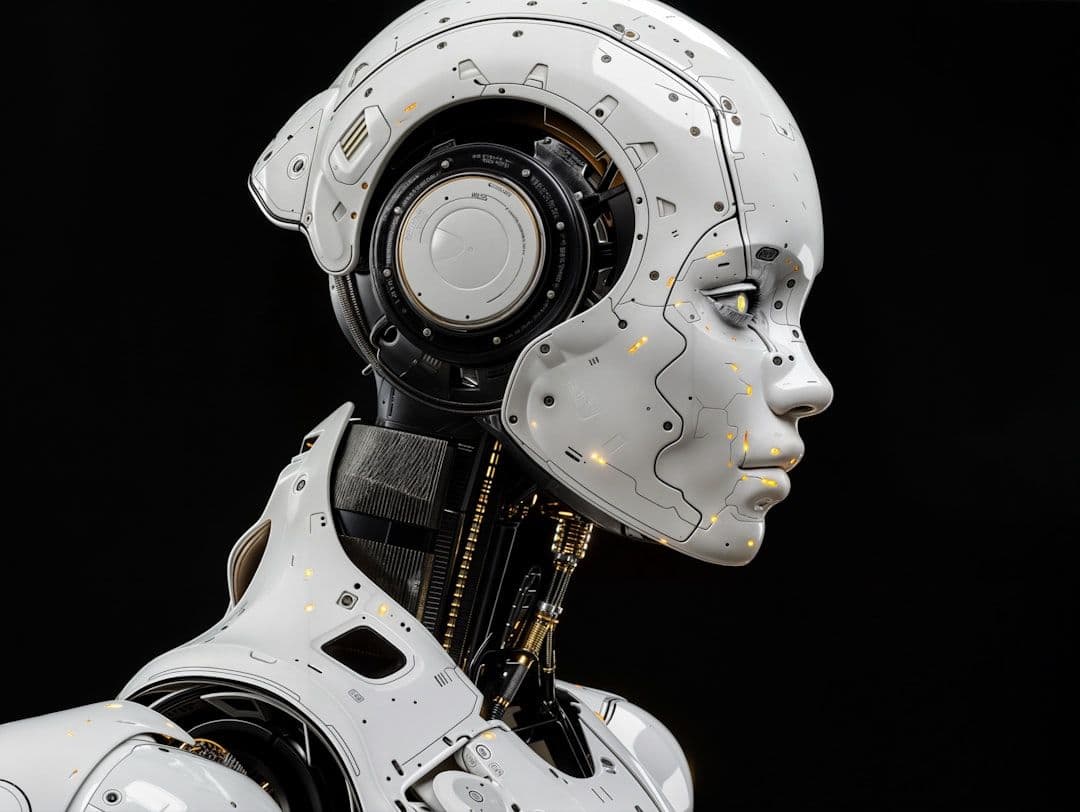
When one of China's most talked-about AI laboratories puts real capital into a robotics company's public listing — and ties that investment to a joint development agreement — it's worth pausing to understand what's actually happening beneath the headline. The August 2026 filing revealing DeepSeek's stake in Unitree Robotics' Shanghai IPO is more than a financial transaction. It's a signal about where the next competitive battleground in embodied AI is being drawn.
The Deal at a Glance
According to a stock-exchange filing from Unitree's Shanghai IPO, Hangzhou-based AI lab DeepSeek committed approximately 140.8 million yuan (roughly $20.8 million USD) as part of the offering's strategic placement tranche, landing it just under 933,000 shares — a 2.31% strategic stake. Alongside the equity position, the two companies disclosed a procurement and co-development agreement that aligns their respective hardware and AI model roadmaps going forward.
Strategic placement tranches in Chinese IPOs are not passive investments. They typically come with lock-up periods and carry an implicit expectation of operational collaboration — which in this case is made explicit by the joint AI model development pact. In short, DeepSeek isn't just a shareholder; it's a technical partner with skin in the game.
Why This Pairing Makes Sense
To understand the logic here, it helps to think about the two distinct problems facing humanoid robotics right now.
The hardware problem is one Unitree has been chipping away at for years. The company has earned a reputation for delivering capable, well-priced robotic platforms — from quadruped robots accessible enough for university labs and developers, like the Unitree Go2, to full-scale bipedal humanoids such as the Unitree G1, a 1.32-meter, 35 kg platform with up to 43 degrees of freedom aimed squarely at embodied AI research. For industrial use cases, the Unitree B2 pushes further still, with IP67 weatherproofing and a walking payload exceeding 40 kg. Unitree has, in other words, demonstrated it can build mechanically credible robots at commercially viable price points.
The intelligence problem is harder. A robot that can walk, balance, and avoid obstacles is impressive engineering. A robot that can reason about its environment, interpret ambiguous instructions, adapt to novel scenarios, and interact naturally with people is a qualitatively different challenge — and it's one that requires large-scale AI model development. This is exactly where DeepSeek enters the picture.
DeepSeek made waves globally in early 2025 when it released highly competitive large language models trained with notably efficient resource utilization. The company's expertise lies in building capable AI systems without requiring the largest possible compute budgets — a property that translates well to on-device and edge deployment scenarios, which are exactly what autonomous humanoid robots require.
What "Joint AI Model Development" Actually Involves
The phrase "jointly develop AI models for humanoid robots" is doing a lot of work. In practical terms, this likely involves several overlapping workstreams:
Whole-body control policies — the AI layer that coordinates dozens of joints simultaneously to produce smooth, stable, purposeful motion — are notoriously difficult to train and even harder to generalize across environments. Language model architectures, adapted for sequential decision-making, have shown promise here.
Instruction following and task planning are areas where large language models shine. A humanoid robot operating in a warehouse, a care facility, or a manufacturing floor needs to interpret spoken or typed instructions, break them into sub-tasks, and recover gracefully when something goes wrong. Coupling DeepSeek's model efficiency with Unitree's physical platforms creates a pipeline for testing these capabilities on real hardware.
Multimodal perception — fusing camera feeds, depth sensors, and proprioceptive data into a unified world model — is another active area. The efficiency-first approach DeepSeek is known for matters enormously here, because running a complex perception model on a mobile robot with limited battery life demands inference that's both fast and lean.
For developers already working with platforms like the Unitree G1 or building edge AI pipelines on compute modules such as the NVIDIA Jetson AGX Orin 64GB or NVIDIA Jetson Orin Nano Super, this collaboration represents a potentially significant expansion of the available model ecosystem.
The Broader Pattern
The DeepSeek–Unitree deal doesn't exist in isolation. It reflects an accelerating convergence between foundation model labs and robotics hardware companies happening across the industry. The underlying thesis is consistent: the most capable autonomous robots will be those where the AI stack and the hardware stack are co-designed from the ground up, rather than bolted together after the fact.
China's robotics sector, in particular, has been moving quickly to close the loop between software intelligence and physical capability. A publicly listed Unitree with a major AI lab as both shareholder and development partner is structurally better positioned to attract talent, secure contracts, and iterate faster than a hardware company going it alone.
What to Watch Next
The real test of this partnership will be visible in two places: first, in the quality and openness of any AI models that emerge for Unitree's platforms; and second, in the range of commercial deployments that become viable as a result. Research labs, logistics operators, and industrial inspection teams will be watching closely to see whether the combination delivers robots that are not just physically impressive, but genuinely useful in complex, unstructured environments.
For anyone building in the embodied AI space — whether as a researcher, developer, or enterprise buyer — the Unitree IPO and the DeepSeek partnership mark a moment worth tracking. The gap between a robot that can move and a robot that can think is narrowing, and the companies investing now in closing it are making a clear bet on where the industry is headed.
Interested in exploring Unitree's current humanoid and quadruped platforms for research or development? Browse the Unitree G1, Unitree Go2, and Unitree B2 — or get in touch with our team to discuss which platform fits your project.
References
This article was drafted with AI assistance and reviewed before publishing.
Related reading
- RoboticsFactory Robots That Retrain in Minutes: What Industrial Next Is Changing About Flexible Automation
- RoboticsWhen Robots Enter the Ring: What California's Crackdown on Human-vs-Robot Fights Tells Us About Humanoid Technology
- RoboticsBuilding Robots That Actually Help People: Lessons from Charlie Kemp and the Stretch Robot
- RoboticsWhen Robots Cry: Understanding Emotional Mimicry in Humanoid AI