
Matternet M3: How Autonomous Drone Delivery Is Moving Beyond the Pilot Phase
By RobotWorld·9/29/2026
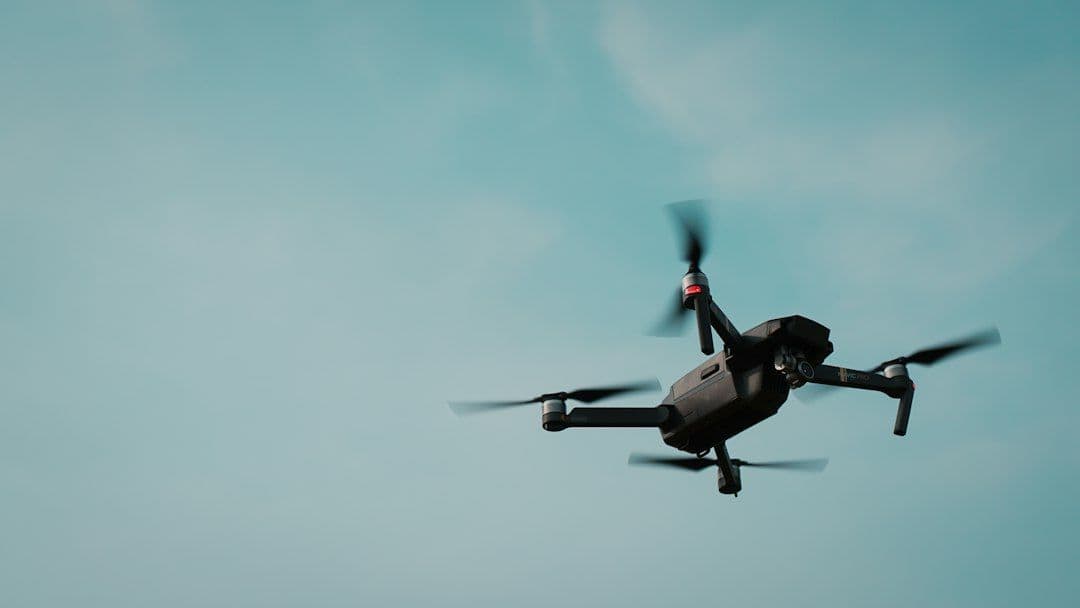
For years, drone delivery has operated in a familiar pattern: carefully controlled pilots, limited corridors, and a lot of human oversight. The technology worked in principle, but scaling it into something that handles thousands of daily deliveries required solving a deeper problem — removing the operational bottleneck of human supervision without sacrificing safety or reliability. Matternet's newly unveiled M3 drone represents a concrete step toward that goal.
What the M3 Brings to the Table
The M3 is purpose-built for logistics at scale. Its headline specifications — an 11-pound (roughly 5 kg) payload capacity and a 10-mile (approximately 16 km) operational range — are not just incremental improvements over previous models. Together, they describe a drone capable of serving real-world delivery routes: think medical supplies moving between a distribution hub and a clinic, or parcels bridging the gap between a fulfillment center and a neighborhood drop point.
What makes the M3 particularly noteworthy isn't just the hardware. Matternet has engineered the system around autonomous operation — the kind that doesn't require a dedicated human pilot monitoring each individual flight in real time. This is a critical distinction. Conventional drone operations often require a remote pilot or observer for each flight, which limits how many flights can run simultaneously and dramatically increases per-delivery costs. True scalability demands that the aircraft, the ground infrastructure, and the fleet management software work together without constant human intervention.
Why "Taking People Out of the Loop" Is the Real Innovation
It's easy to read "autonomous drone delivery" and imagine simply pressing a button and watching a package fly off. The engineering reality is far more complex. A drone operating without continuous human oversight needs to handle a wide array of dynamic conditions on its own: shifting winds, airspace changes, unexpected obstacles, battery management, and contingency planning if something goes wrong mid-flight.
Achieving this requires multiple layers of redundancy — in navigation, communication, and failure detection. The drone must continuously assess its own state, stay within approved flight corridors, and know when to safely abort a mission and return. Ground infrastructure, including automated landing pads and charging or battery-swap stations, also needs to operate with minimal manual intervention to support high-frequency operations.
From a regulatory standpoint, operating beyond visual line of sight (BVLOS) without a dedicated observer is one of aviation's harder permits to obtain. Companies like Matternet have had to work closely with civil aviation authorities to demonstrate that their systems meet safety standards that are, in some jurisdictions, still being defined. The M3 represents not just an engineering statement but a signal of Matternet's confidence in navigating that regulatory landscape.
The Infrastructure Layer: Where Drones Become a Network
A single drone making a delivery is a demonstration. A fleet of drones making thousands of deliveries every day is infrastructure. The difference is the network behind the aircraft.
Matternet's approach has always centered on the idea of drone networks — interconnected hubs, automated ground stations, and centralized fleet management software that orchestrates flights across a city or region. The M3 fits into this architecture as the latest and most capable aircraft node. Its extended range means fewer intermediate hubs are needed to cover a given service area, reducing capital costs and simplifying operations.
This network-first thinking is increasingly shared across the industry. The question for drone delivery has shifted from "can the drone do it?" to "can the entire system sustain it at scale?" — encompassing everything from air traffic management integrations to cold-chain packaging for medical payloads.
Real-World Applications Worth Watching
The M3's specifications map closely to high-value delivery use cases where speed and reliability justify the cost of autonomous infrastructure:
- Healthcare logistics: Medications, blood products, lab samples, and diagnostic equipment all benefit enormously from fast, point-to-point delivery that bypasses road traffic.
- Last-mile e-commerce: In suburban and semi-rural areas where delivery van routes are inefficient, drone hubs could handle the final leg of a parcel's journey.
- Industrial supply chains: Facilities spread across large campuses or remote areas — think mining operations, utility sites, or large agricultural estates — can use drones to move parts and tools without waiting for ground vehicles.
For operators exploring enterprise aerial platforms, the DJI Mavic 3 Enterprise and Autel EVO Max 4T illustrate how purpose-built hardware — with multi-sensor payloads, mapping capabilities, and professional flight management — serves as a foundation for serious commercial operations. While these are pilot-operated aircraft rather than autonomous delivery systems, they demonstrate the kind of sensor integration and operational robustness that underpins the broader drone industry's trajectory.
For developers and researchers building autonomy stacks for aerial or ground robots, edge AI compute platforms like the NVIDIA Jetson AGX Orin 64GB highlight what it takes to run complex perception and decision-making workloads on the vehicle itself — a capability that sits at the heart of any truly autonomous system.
What Comes Next
Matternet's M3 launch is a reminder that the drone delivery industry is entering a new phase — one defined less by what the aircraft can technically do and more by whether the surrounding ecosystem of regulation, infrastructure, and operational software can support it. The companies that will define this space are those treating the entire delivery system as the product, not just the drone.
If the M3 performs as designed, it could offer a compelling template for what scalable, urban drone logistics actually looks like: quiet, efficient, and — crucially — running around the clock without a human hand on the controls.
Interested in enterprise drone platforms or autonomous robotics for your operations? Browse RobotWorld's full range and reach out to our team to discuss what fits your use case.
References
This article was drafted with AI assistance and reviewed before publishing.
Related reading
- Autonomous DrivingWhy Doug Field Joining Mind Robotics Is a Big Deal for Autonomous Vehicle AI
- Autonomous DrivingRobotaxis and School Zones: What the Federal Inquiry Into Tesla's AV Speed Violations Tells Us About Autonomous Driving's Hardest Problem
- Autonomous DrivingWhy a Key Regulatory Roadblock for Self-Driving Trucks Just Cleared — And What It Means for Autonomous Freight
- Autonomous DrivingRobotaxis Under the Microscope: Why Regulators Are Catching Up With Autonomous Vehicles