
Pre-Positioned Drones: How Flytrex Is Rethinking the Last-Mile Delivery Bottleneck
By RobotWorld·9/26/2026
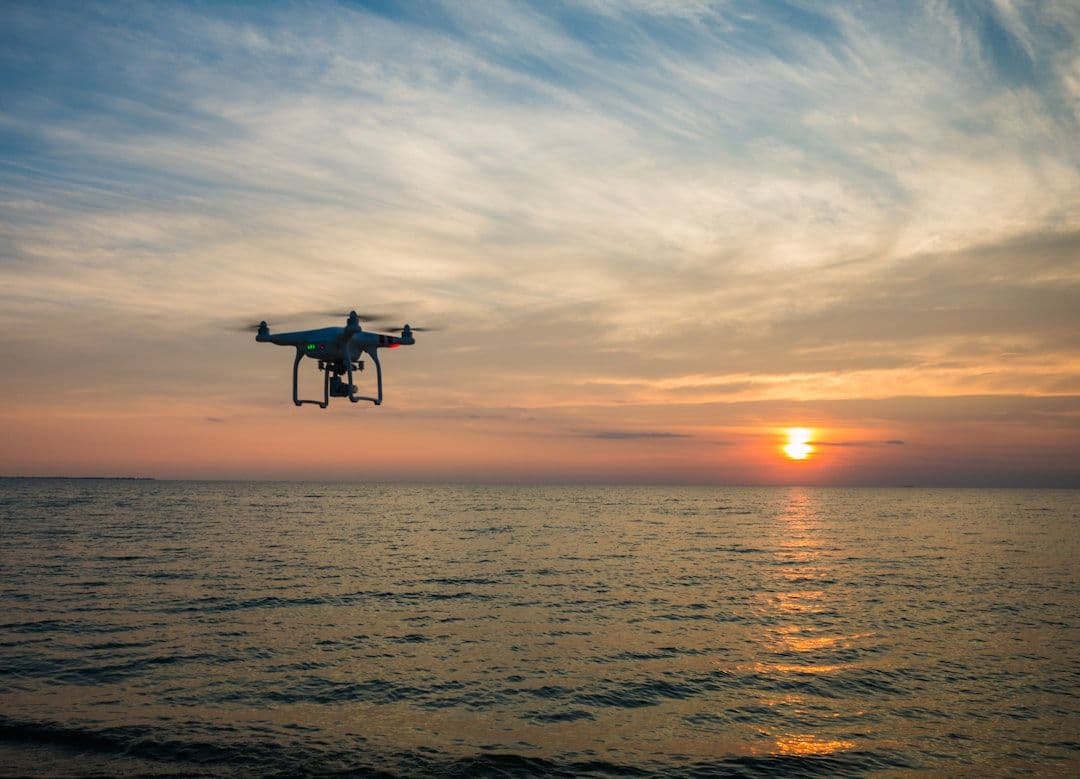
Drone delivery has made remarkable strides. The flying itself — stable autonomous navigation, precision landing, safe payload release — has become a largely solved engineering challenge. Yet a surprisingly mundane problem continues to undercut the customer experience: the wait between a meal leaving the kitchen and the moment the drone actually lifts off. Flytrex, one of the more established players in the consumer drone delivery space, believes it has found a structural fix, and the approach is elegantly simple: park the drone at the restaurant before the customer ever taps "order."
The Real Bottleneck Isn't the Sky
When most people imagine drone delivery delays, they picture slow flight or complicated airspace routing. In practice, the flight itself is often the fastest part of the journey. The real drag on delivery time has been ground-side coordination — getting a freshly prepared meal from the restaurant's pass-through window into a drone-ready package and off the ground before the food loses quality.
Traditional logistics models treat the drone as a vehicle that responds to demand: an order is placed, a drone is dispatched from a hub or depot, it arrives at the restaurant, the food is loaded, and only then does the flight begin. Each handoff adds minutes, and in the food delivery world, minutes translate directly to customer satisfaction.
Flytrex's insight is that this response model is fundamentally reactive. The company is now experimenting with a proactive alternative: stationing drones at or near restaurants during peak hours, ready to lift off the moment a meal is ready — regardless of when the customer actually placed the order.
Predictive Positioning as a System Design Principle
What Flytrex is describing is less a new drone technology and more a rethinking of operational architecture. The strategy draws on concepts well-established in other logistics contexts — ambulance pre-positioning, taxi demand forecasting, dark kitchen inventory pre-building — and applies them to aerial last-mile delivery.
The underlying logic works like this. Restaurants, particularly fast-food and quick-service chains, have reasonably predictable demand curves tied to time of day, day of week, and local events. If a delivery operator can forecast that a given location will generate a surge of orders between noon and 1 p.m., pre-positioning a drone (or several) at that site during that window eliminates the dispatch latency entirely. When the meal hits the collection point, the drone is already there. The flight begins in seconds, not minutes.
This model also changes how restaurant staff interact with the delivery system. Rather than watching a drone arrive and then packaging the order, staff can coordinate food preparation to the drone's readiness state — a tighter loop that benefits freshness on both ends.
Why This Matters for the Industry
Drone delivery has been caught in a credibility gap for years. The technology demonstrably works, but the end-to-end customer experience — from order to doorstep — has struggled to consistently beat a competent human courier, particularly for hot food. Speed and freshness are what justify the premium complexity of aerial delivery. Shaving several minutes off the ground-side wait doesn't just improve one metric; it reframes the entire value proposition.
Pre-positioning also has implications for drone utilization rates. A drone sitting idle at a depot between orders is a depreciating asset. A drone staged at a high-volume restaurant during a lunch rush is a productive asset waiting to turn. From a unit economics standpoint, higher utilization per vehicle is one of the clearest paths to making drone delivery financially sustainable at scale.
There are operational challenges to navigate, of course. Weather windows, airspace coordination with local regulators, and the physical logistics of staging hardware at third-party restaurant locations all add complexity. Battery state management — ensuring pre-positioned drones are charged and ready without overcycling cells — is a non-trivial engineering consideration. And if demand forecasts are wrong, pre-positioned drones simply sit unused, eroding the efficiency gains the model promises.
A Signal of Industry Maturation
What's most interesting about Flytrex's approach is what it signals about the broader maturity of the drone delivery sector. Early-stage aerial delivery was almost entirely focused on demonstrating that drones could fly autonomously and safely. That question has been answered. The industry is now engineering the layers above and around the flight itself — dispatch logic, ground infrastructure, restaurant integration, and demand prediction — because those are where the remaining friction lives.
This is the same trajectory that transformed ride-hailing from a novelty into a utility: the technology was table stakes; the operational model was the product.
For logistics operators, urban planners, and restaurant brands exploring the next evolution of delivery infrastructure, Flytrex's pre-positioning experiment is worth watching closely. It won't require a breakthrough in battery chemistry or autonomy software. It just requires thinking about where the drone should be before anyone asks where it's going.
Interested in exploring enterprise drones and autonomous systems for your logistics or commercial operations? Browse RobotWorld's range of professional drone platforms and get in touch with our team to discuss what fits your use case.
References
This article was drafted with AI assistance and reviewed before publishing.
Related reading
- DronesDrone Delivery in 20 Minutes: What Lowe's Wing Pilot Tells Us About the Future of Last-Mile Logistics
- DronesHow Drones Are Turning Heritage Sites Into Permanent 3D Records
- DronesFCC Clears Cellular Testing for Drones: What It Means for the Future of the Sky
- DronesBVLOS Drone Deliveries Cleared in Zimbabwe: What the KITE UAS Approval Means for African Logistics