
Skydio's F10, MegaDock, and Fleet Software: What Autonomous Drone Fleets Actually Mean for Industry
By RobotWorld·9/26/2026
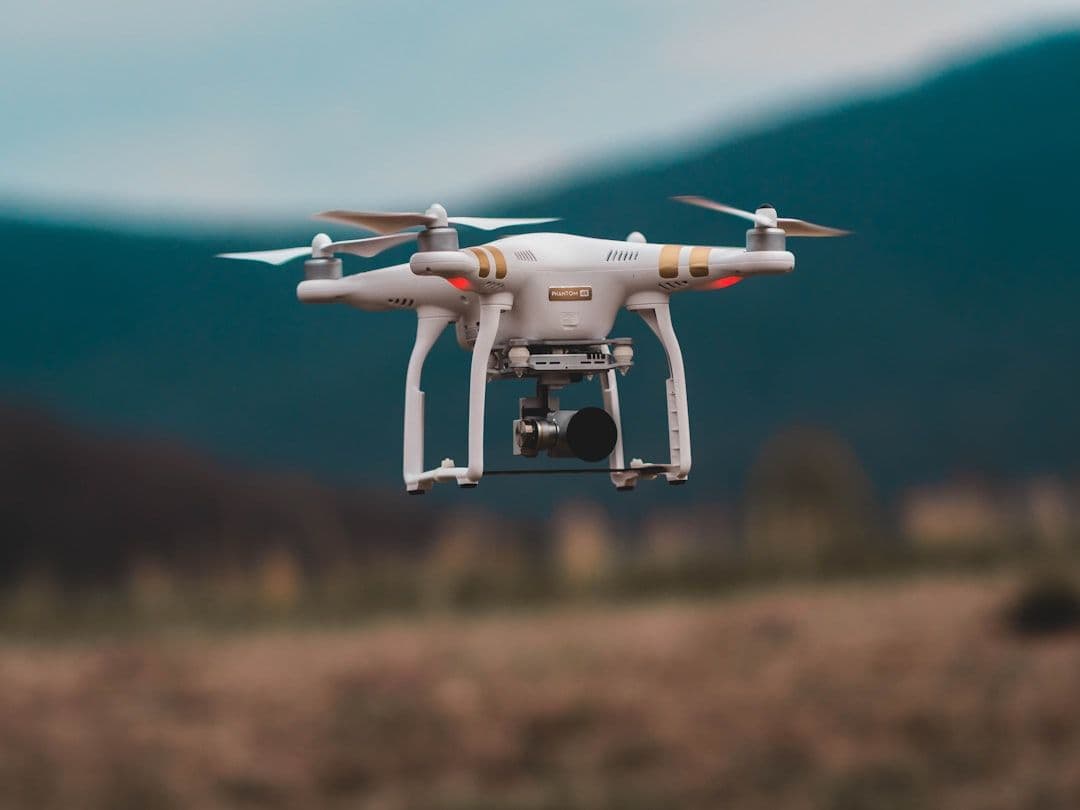
Skydio's latest product push — a new enterprise drone called the F10, a large-scale docking station named MegaDock, and an updated fleet autonomy software layer — isn't really a hardware story. It's an argument about where the entire commercial drone industry is heading. That destination: fleets of intelligent aerial machines that take off, do their jobs, return to base, and recharge with minimal human oversight.
Here's what that shift means in practice, and why it matters far beyond Skydio's own product line.
From Solo Flights to Coordinated Fleets
For most of the past decade, commercial drones have been fundamentally single-aircraft tools. A pilot or an operator planned a mission, launched one drone, monitored the flight, and retrieved it afterward. Even highly automated drones — those capable of following waypoints, mapping terrain, or tracking subjects — still depended on a person nearby making real-time decisions.
Skydio's announcements are part of a broader industry movement to flip that model. The F10 appears designed from the ground up to operate as part of a coordinated group rather than as a standalone device. Paired with MegaDock — a docking and charging infrastructure platform capable of housing multiple aircraft — and a software stack that can orchestrate missions across an entire fleet, the vision is clear: one operator, or a small team, managing many drones simultaneously across a large area.
This is the "Drone as a Service" model reaching maturity. Instead of deploying a single aircraft for a two-hour inspection window, an organization could maintain a persistent aerial presence — drones cycling in and out of the dock, continuously covering a facility, pipeline route, or large property.
Why Autonomy Is the Hard Part
The hardware itself — a capable drone and a weatherproof docking station — is relatively well understood at this point. Several manufacturers already offer dock-and-drone combinations for enterprise use. The genuinely difficult problem is the software autonomy layer: giving a fleet the intelligence to make safe, sensible decisions without constant human input.
True fleet autonomy requires solving several challenges simultaneously. Drones must navigate dynamic environments — changing weather, unexpected obstacles, other aircraft — without a pilot correcting their course in real time. They need to manage their own energy, deciding when to return to dock before a battery becomes critically low. They must coordinate with each other to avoid conflicts, cover ground efficiently, and adapt when one aircraft is unavailable. And they need to do all of this while producing data — images, thermal scans, sensor readings — that is actually useful to the operators reviewing it afterward.
This is where on-board AI compute becomes critical. Modern enterprise drones increasingly rely on edge AI chips — similar in principle to platforms like the NVIDIA Jetson AGX Orin 64GB — to run perception, navigation, and decision-making algorithms directly on the aircraft, without depending on a constant connection to a remote server. Low latency and reliability in the field demand that intelligence lives close to the sensor.
Real-World Applications Driving This Push
The use cases Skydio is targeting reflect genuine industry demand across several sectors:
Infrastructure Inspection: Utilities, telecoms, and energy companies manage thousands of kilometers of assets — power lines, pipelines, towers, wind turbines — that require regular inspection. Autonomous drone fleets can cover these routes on scheduled cycles, flagging anomalies with thermal or optical cameras without requiring a crew to travel to remote locations. Enterprise drones like the Autel EVO Max 4T, with its multi-sensor thermal and zoom payload, illustrate what kind of sensing capability these inspection missions demand.
Emergency Response and Public Safety: Emergency services and large venue operators are increasingly interested in "drone in a box" systems that can deploy automatically when a sensor or alarm is triggered — reaching an incident site in seconds rather than the minutes it might take a ground unit. A fleet approach multiplies that capability.
Large Property and Perimeter Monitoring: Logistics parks, ports, utilities campuses, and agricultural operations all have perimeters that are expensive to monitor continuously with ground-based security. Autonomous aerial patrols offer a flexible, scalable alternative. Agricultural operators, already familiar with autonomous drone workflows from precision spraying platforms like the DJI Agras T50, are a natural audience for this kind of persistent monitoring capability.
The Bigger Industry Signal
Skydio's announcement reflects something the broader frontier-technology sector is beginning to internalize: the value of a drone is increasingly less about the aircraft itself and more about what it can do without a trained pilot present. Regulatory frameworks in the U.S. and elsewhere are slowly evolving to accommodate Beyond Visual Line of Sight (BVLOS) operations — the regulatory category that makes large-scale autonomous drone fleets legally viable. As those frameworks mature, the market for dock-and-fleet systems is expected to expand considerably.
This also puts pressure on every other player in the enterprise drone market to accelerate their own autonomy capabilities. A drone that requires a certified remote pilot for every flight becomes a harder sell when a competitor's system can operate through the night on a preprogrammed schedule.
What to Watch Next
The gap between a compelling product announcement and reliable, certified autonomous operation at scale is real — regulatory approval, demonstrated safety records, and integration with existing operational systems all take time. But the direction is unmistakable.
For organizations beginning to evaluate how autonomous drone operations could fit into their inspection, monitoring, or emergency-response workflows, now is the right moment to explore what current enterprise platforms can deliver. Reach out to our team to discuss which drone hardware and autonomy solutions are best suited to your operational requirements.
References
This article was drafted with AI assistance and reviewed before publishing.
Related reading
- Autonomous DrivingTesla FSD Supervised Heads to the Czech Republic: What It Means for Autonomous Driving in Europe
- Autonomous DrivingJoby Aviation's Cross-Country Autonomous Flight: What It Means for the Future of Electric Air Mobility
- Autonomous DrivingBentiX and the Rise of Compact Underwater Drones: Exploring the Deep Without Breaking the Bank
- Autonomous DrivingLucid and Bolt's 25,000-Robotaxi Plan: What It Means for the Future of Urban Mobility in Europe