
DJI's Agras T55 and T100: What the Next Generation of Agricultural Drones Means for Precision Farming
By RobotWorld·7/9/2026
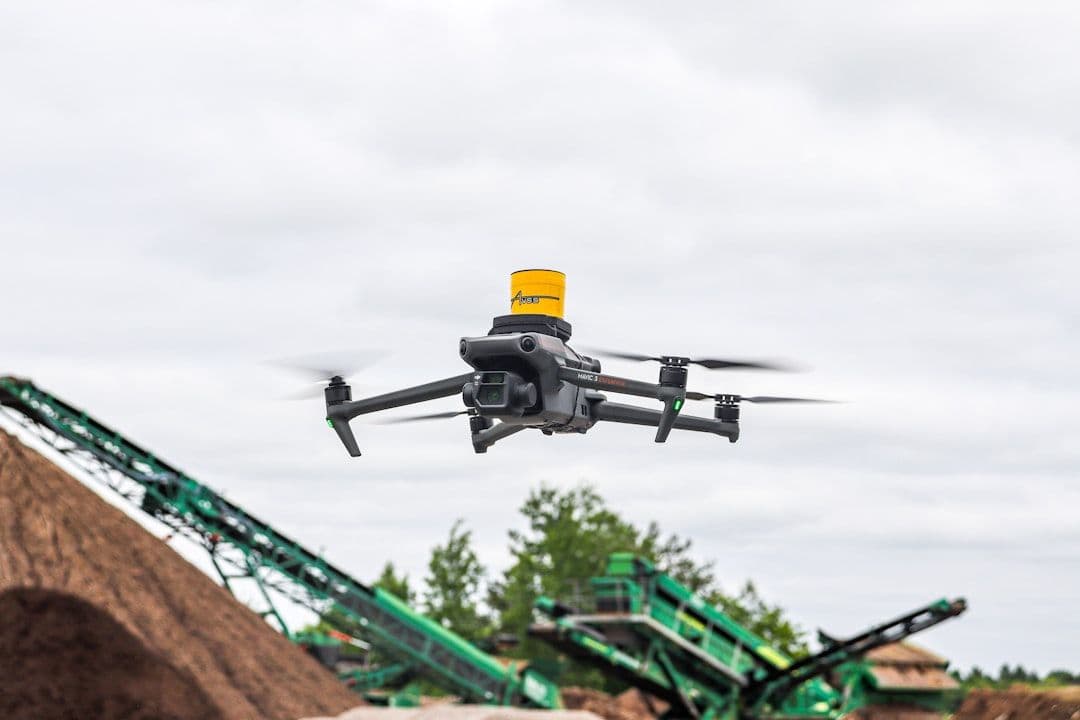
DJI has built its agricultural reputation over more than a decade, turning what was once a novelty — spraying crops from the air — into a mature, data-driven discipline. The global debut of two new platforms, the Agras T55 and the Agras T100 Dual Battery Spraying System, marks another meaningful step in that journey. Here's what these machines represent, why the design choices matter, and how they fit into the broader arc of smart agriculture.
Why Agricultural Drones Have Become Indispensable
Conventional ground-based spraying equipment has two fundamental limitations: it struggles with uneven terrain, and it physically contacts — and sometimes damages — crops during operation. Aerial application sidesteps both problems. A drone can fly a precisely mapped grid over a sloped orchard, a flooded paddy field, or a hillside vineyard without compacting soil or snapping stems.
Beyond access, there's the data layer. Modern agri-drones don't just spray — they carry sensors that build real-time terrain models, detect obstacles, and adjust flight altitude on the fly. The result is more uniform coverage, reduced chemical waste, and lower labor costs. For large-scale commercial operations, the efficiency gains are substantial. For smallholder farmers working difficult land, the accessibility benefits can be even more transformative.
The Agras T55: Bridging the Middle Ground
The T55 appears positioned as a capable mid-range platform — powerful enough for serious commercial use, but designed to remain practical for operators who don't need the sheer scale of DJI's flagship aircraft. This kind of tiered approach makes strategic sense. Not every farm is thousands of acres. Orchards, greenhouses, and mixed-crop smallholdings need a drone that can maneuver precisely in tighter spaces and transition quickly between tasks.
Agricultural drones are increasingly expected to do more than spray liquid pesticides or fertilizers. Spreading dry granular materials — seeds, pelleted fertilizers, pest-control granules — is a growing use case, and the T55 is built with that multi-mission versatility in mind. The ability to swap between spraying and spreading configurations without a complete equipment change is a meaningful operational advantage.
The Agras T100: Scaling Up with Dual Battery Architecture
The T100 takes a different design philosophy: go big, and make sure the aircraft can sustain that scale in the field. The "Dual Battery Spraying System" nomenclature signals that DJI has prioritized flight endurance and power delivery at higher payload levels. Agricultural operations lose productivity to battery swaps and downtime more than to almost any other variable, so engineering a platform that extends operational windows is a direct response to real-world farm feedback.
Large-scale field cropping — think grain, cotton, soybeans, or rice across hundreds of contiguous hectares — demands a different calculus than an orchard run. Coverage rate, turnaround time, and cost-per-acre become the critical metrics. By targeting these at the high end of their product range, DJI is competing directly with fixed-wing and manned aerial application services that have historically dominated large-acreage markets.
The T100's design also reflects lessons learned from heavy-lift drone engineering more broadly: bigger aircraft need smarter safety systems. Redundant power architectures reduce the catastrophic risk of a single battery failure mid-flight over a working farm.
Sensing and Autonomy: The Real Differentiator
What separates modern agricultural drones from their earlier predecessors isn't just bigger tanks or longer flight times — it's intelligence. Radar and vision-based obstacle avoidance, terrain-following algorithms, and integration with field management software allow these aircraft to operate semi-autonomously across complex landscapes.
This matters enormously in practice. A hillside tea plantation or a paddy field broken up by irrigation channels is not a flat, obstacle-free environment. A drone that can dynamically adjust its altitude relative to the crop canopy — rather than flying at a fixed elevation above sea level — delivers far more consistent droplet coverage. Inconsistent coverage means inconsistent efficacy, which undermines the entire economic argument for aerial application.
DJI's existing Agras lineup, including the DJI Agras T50, already demonstrates what this sensing-plus-autonomy combination can achieve. The T55 and T100 build on that foundation, extending the platform's capabilities to new farm scales and operating environments.
The Bigger Picture: Drones as Farm Infrastructure
The global launch of the T55 and T100 is a signal that DJI sees precision agriculture as a long-term infrastructure play, not a product cycle. By offering a coherent family of aircraft — from versatile mid-range platforms to high-capacity workhorses — they're positioning themselves as the end-to-end solution for aerial farm management across every major growing region in the world.
For agricultural operators, technology integrators, and agribusiness investors, the message is clear: aerial precision agriculture is no longer experimental. It's scalable, it's commercially viable, and with each new generation of hardware, it's becoming the expected standard rather than the premium exception.
Whether you're managing a family orchard or coordinating crop protection across a commercial grain operation, the right drone platform is increasingly one of the most impactful investments available. If you're evaluating how next-generation agricultural drones could fit your operation or product lineup, reach out to our team to explore the options.
References
This article was drafted with AI assistance and reviewed before publishing.
Related reading
- DronesBeyond GPS: How Elsight's New Positioning Tech Could Transform Drone Navigation
- DronesEnd of an Era: The DJI Phantom 4 Pro V2.0 Is Being Retired — and What It Means for Aerial Photography
- DronesHow Faster FAA Airspace Clearance Is Changing the Way Emergency Drones Get Deployed
- DronesDJI Mini 5 Pro Fly More Combo: What the Sub-$1,000 Deal Actually Gets You