
End of an Era: The DJI Phantom 4 Pro V2.0 Is Being Retired — and What It Means for Aerial Photography
By RobotWorld·10/13/2026
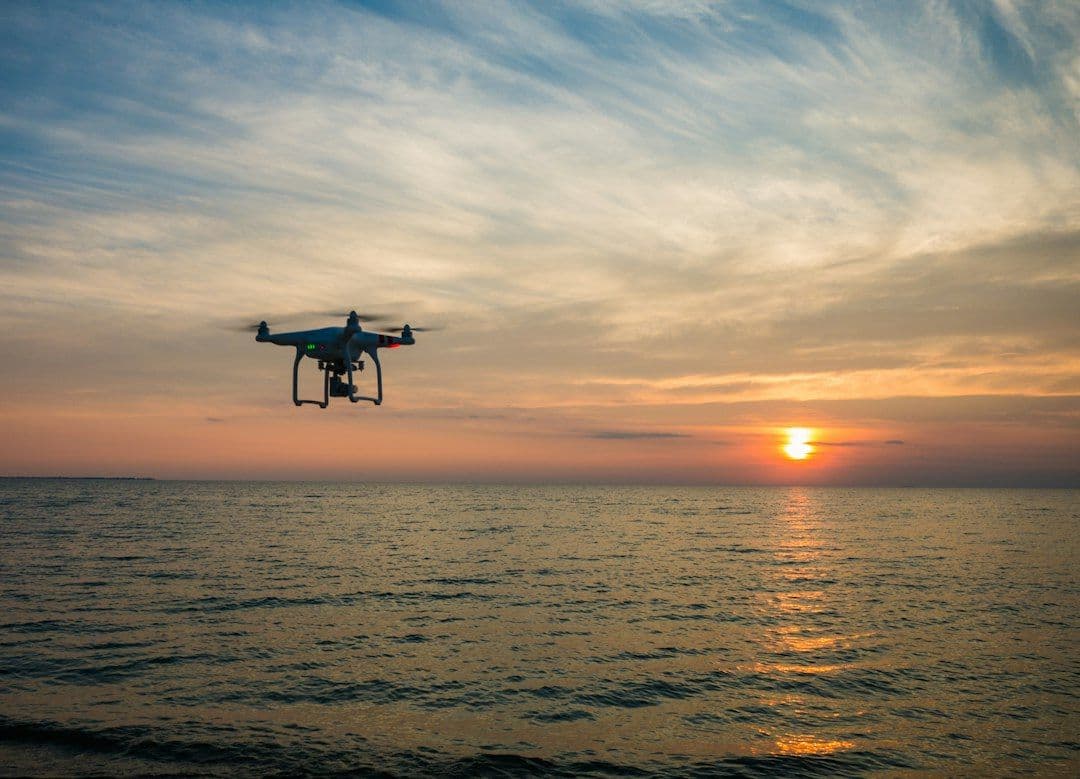
Few consumer drones have left a mark on aerial photography quite like the DJI Phantom series. Before folding-arm designs became the industry default, the iconic white quadcopter with its fixed arms and globe-shaped camera mount was practically synonymous with "drone photography." Now, the last meaningful member of that lineage — the Phantom 4 Pro V2.0 — is reaching the end of its product life. It's a moment worth pausing on, both for what this aircraft accomplished and for what its departure tells us about where drone technology is heading.
Why the Phantom 4 Pro V2.0 Was a Big Deal
When it launched, the Phantom 4 Pro V2.0 solved a problem that had long frustrated serious aerial photographers: image quality. Its defining feature was a one-inch camera sensor — significantly larger than the sensors found in most consumer drones of its era — paired with a mechanical shutter. That combination mattered enormously in practice. A larger sensor captures more light, producing cleaner images in tricky lighting conditions. And a mechanical shutter eliminates the "rolling shutter" distortion that electronic shutters introduce when photographing fast-moving subjects or when the aircraft itself is moving quickly — a common problem during mapping and survey work.
Add 4K video at 60 frames per second to that package and you had an aircraft that sat at a genuine crossroads: accessible enough for ambitious hobbyists, yet capable enough for professional workflows in real estate, filmmaking, and aerial survey.
The V2.0 refresh also brought OcuSync transmission technology, giving pilots a more reliable video link at distance — something that mattered in open-field and construction site environments where interference can be an issue.
The Broader Shift That Made It Obsolete
The Phantom 4 Pro V2.0's retirement isn't a story of failure. It's a story of a product category being overtaken by a design philosophy it helped inspire.
The drone market has moved decisively toward foldable, compact airframes. What once required a large, rigid chassis to house the battery, motors, and camera can now be packed into a device that fits in a jacket pocket. Folding drones have matched — and in many cases surpassed — the Phantom's imaging capabilities while offering meaningful advantages in portability and, crucially, regulatory weight thresholds.
In many jurisdictions, drones under 249 grams face far lighter regulatory requirements than heavier aircraft. This has driven enormous engineering effort into packing high-quality cameras into the lightest possible frames. The result is a generation of compact drones that would have seemed implausible just a few years ago.
The Phantom's fixed-arm form factor, while sturdy and stable, simply couldn't compete with that trajectory. Carrying a Phantom required a dedicated backpack. Today's equivalent imaging power often fits in a belt pouch.
What Fills the Gap?
For photographers and creators who valued what the Phantom 4 Pro V2.0 offered, the drone landscape today provides compelling alternatives at different price and capability tiers.
At the premium compact end, the DJI Mini 4 Pro sits under the 249-gram threshold while delivering a 1/1.3-inch sensor and omnidirectional obstacle sensing — a combination that would have seemed extraordinary just a few years ago. It's the clearest example of how much the compact segment has matured.
For professional mapping, survey, and inspection work — the bread-and-butter commercial applications where the Phantom 4 Pro genuinely excelled — the DJI Mavic 3 Enterprise takes things considerably further. Its 4/3-inch sensor, 56× hybrid zoom, and optional RTK module for centimeter-level GPS accuracy make it a capable successor for precision workflows, all in a sub-kilogram foldable body.
For those whose workflows require enterprise-grade imaging and who need options beyond a single manufacturer's ecosystem, the Autel EVO Max 4T brings a four-sensor payload — wide camera, high-magnification zoom, thermal imaging, and a laser rangefinder — in a single folding platform designed for inspection, public safety, and mapping operations.
What the Phantom's Legacy Teaches Us
The Phantom line's most lasting contribution may not be any single spec sheet entry. It's the role these aircraft played in normalizing aerial photography as a professional discipline. Before the Phantom era, getting broadcast-quality aerial footage required a helicopter, a full crew, and a significant budget. The Phantom series compressed that barrier dramatically, enabling industries from real estate to agriculture to emergency response to rethink what was possible from above.
The one-inch sensor that made the Phantom 4 Pro V2.0 special is now table stakes for serious prosumer drones. The mechanical shutter it pioneered in the consumer space is now a standard ask in professional RFQs. That's what mature technology looks like: the innovation becomes the baseline.
A Respectful Send-Off
Retiring a product is rarely just a business decision — it's a signal about where an industry's center of gravity has moved. The Phantom 4 Pro V2.0's discontinuation confirms what aerial photographers have observed for several years: compactness and regulatory agility have become the primary axes of competition, and the fixed-arm, larger-body form factor no longer offers a compelling trade-off.
For anyone who flew a Phantom — or who watched one buzzing overhead on a film set or a survey site — this is a moment worth acknowledging. The aircraft earned its place in the history of imaging technology. And the drones it helped make possible are still up there, flying on.
Exploring a new aerial photography platform or upgrading a professional drone fleet? Browse our range of cameras drones and enterprise UAVs, or get in touch with our team to discuss the right solution for your workflow.
References
This article was drafted with AI assistance and reviewed before publishing.
Related reading
- DronesBeyond GPS: How Elsight's New Positioning Tech Could Transform Drone Navigation
- DronesHow Faster FAA Airspace Clearance Is Changing the Way Emergency Drones Get Deployed
- DronesDJI Mini 5 Pro Fly More Combo: What the Sub-$1,000 Deal Actually Gets You
- DronesBeam Global's $24 Million ScoutDI Acquisition: What It Means for the Industrial Drone Industry