
DoorDash Air Explained: Why the Delivery Giant Is Building Its Own Drone Ecosystem
By RobotWorld·10/1/2026
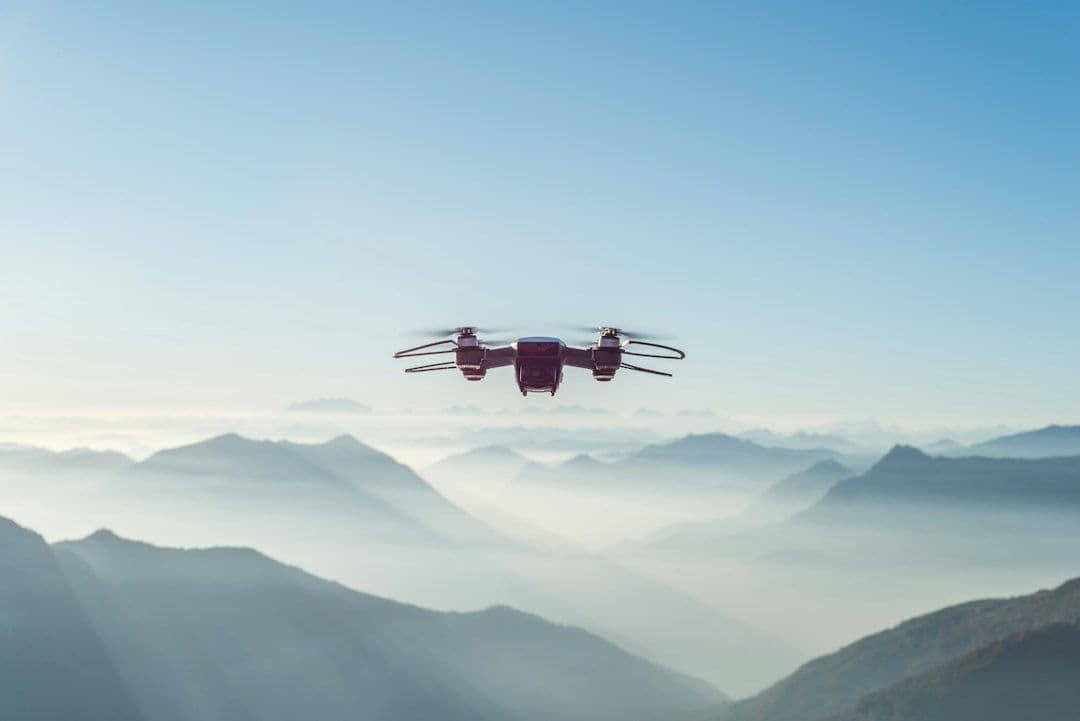
For years, DoorDash has been quietly dipping its toes into drone delivery — partnering with operators like Wing and Flytrex to test autonomous last-mile drop-offs in select markets. Now, the company is making a far more ambitious move: building the entire stack itself. Under the banner of DoorDash Air, the company is developing its own aircraft, ground-side infrastructure, and proprietary delivery software. It's a significant strategic shift — and it offers a fascinating window into where autonomous delivery logistics is heading.
From Partner to Platform Owner
The partnership model made obvious sense in the early days. Drone delivery is technically complex and heavily regulated. By working with experienced operators, DoorDash could offer the service to customers without shouldering the full burden of airworthiness certification, fleet management, or airspace coordination. However, partnerships come with inherent limitations: less control over performance, costs tied to third-party margins, and limited ability to differentiate.
By internalizing these capabilities, DoorDash is following a playbook that Amazon has pursued aggressively with Prime Air, and that other logistics giants are eyeing with interest. Owning the aircraft design means you can optimize specifically for your delivery profile — package weight, flight range, drop precision, and weather tolerance. Owning the software means you can integrate drone dispatch seamlessly with your existing order-routing algorithms. And owning the ground infrastructure means you can position launch pads where your data says demand is highest.
It's a vertical integration strategy, applied to the sky.
What "Building Your Own Drone Ecosystem" Actually Involves
The phrase "developing its own aircraft" sounds straightforward, but the engineering scope is substantial. A commercial delivery drone isn't just a consumer-grade quadcopter with a cargo hook attached. It requires:
- Airframe and propulsion engineering tuned for payload-to-range efficiency, redundancy, and safe failure modes.
- Autonomy software capable of handling dynamic weather, varied urban terrain, and real-time airspace deconfliction — all without a remote pilot in the loop for every flight.
- Detect-and-avoid systems to satisfy regulatory requirements and operate safely around manned aircraft, birds, and other drones.
- Ground infrastructure — landing pads, charging or battery-swap stations, and package handoff mechanisms — that can be deployed at scale in parking lots, rooftops, or merchant facilities.
- Delivery software that ties drone dispatch to consumer-facing order tracking, merchant integration, and fleet management dashboards.
Each of these layers is a significant engineering undertaking in its own right. That DoorDash is pursuing all of them simultaneously signals serious long-term commitment, and likely significant capital investment.
The Regulatory Landscape Matters Here
No drone delivery ecosystem succeeds in isolation from regulators. In the United States, the FAA governs Beyond Visual Line of Sight (BVLOS) operations — the mode that commercial drone delivery requires at scale. Obtaining BVLOS waivers or operating under evolving Part 135 frameworks demands rigorous safety data, operational procedures, and ongoing engagement with aviation authorities. Companies that control their own aircraft and software have a cleaner path to building that regulatory dossier compared to those stitching together third-party technology.
DoorDash's move in-house may therefore be partly about regulatory positioning: companies that demonstrate end-to-end accountability for their systems tend to have stronger standing in certification conversations.
What This Means for the Last-Mile Delivery Industry
The implications ripple outward. For consumers, a vertically integrated drone program could eventually mean faster, cheaper deliveries — particularly for lightweight, time-sensitive items like medications, restaurant meals, or convenience goods. For merchants on the DoorDash platform, it could open up a new tier of premium delivery options. For the broader logistics industry, it reinforces the message that autonomous aerial delivery is no longer a proof-of-concept curiosity — it's becoming a genuine infrastructure investment.
The competitive pressure is real. Wing (backed by Alphabet) and Zipline have been expanding rapidly. Amazon Prime Air is scaling. DoorDash apparently concluded that remaining a customer of these ecosystems, rather than a builder of one, was an increasingly untenable position.
The Bigger Picture: Integrated Autonomous Logistics
What DoorDash Air illustrates is the broader convergence happening across autonomous logistics. Ground-based delivery robots, autonomous vehicles, and aerial drones are no longer being developed in isolation — the most capable operators are thinking about how they work together. A future delivery network might see a drone complete the final hundred meters of a route that started with an autonomous ground vehicle, all coordinated by a unified software layer.
For those building expertise in drone technology — whether through enterprise-grade platforms like the DJI Mavic 3 Enterprise for mapping and inspection workflows, or precision agricultural systems like the DJI Agras T50 that already demonstrate what autonomous fleet operations look like at scale — the DoorDash Air story is a clear signal: the demand for engineers, operators, and developers who understand autonomous aerial systems is only going to grow.
The sky, it turns out, is very much part of the future of ground-level delivery.
Curious about drone technology for your own commercial or industrial workflows? Explore our range of professional drone platforms and reach out to our team to discuss the right solution for your application.
References
This article was drafted with AI assistance and reviewed before publishing.
Related reading
- DronesBeyond GPS: How Elsight's New Positioning Tech Could Transform Drone Navigation
- DronesEnd of an Era: The DJI Phantom 4 Pro V2.0 Is Being Retired — and What It Means for Aerial Photography
- DronesHow Faster FAA Airspace Clearance Is Changing the Way Emergency Drones Get Deployed
- DronesDJI Mini 5 Pro Fly More Combo: What the Sub-$1,000 Deal Actually Gets You