
Why BRINC's $125 Million Raise Could Redefine Emergency Response — and What It Means for Public Safety Drones
By RobotWorld·7/21/2026
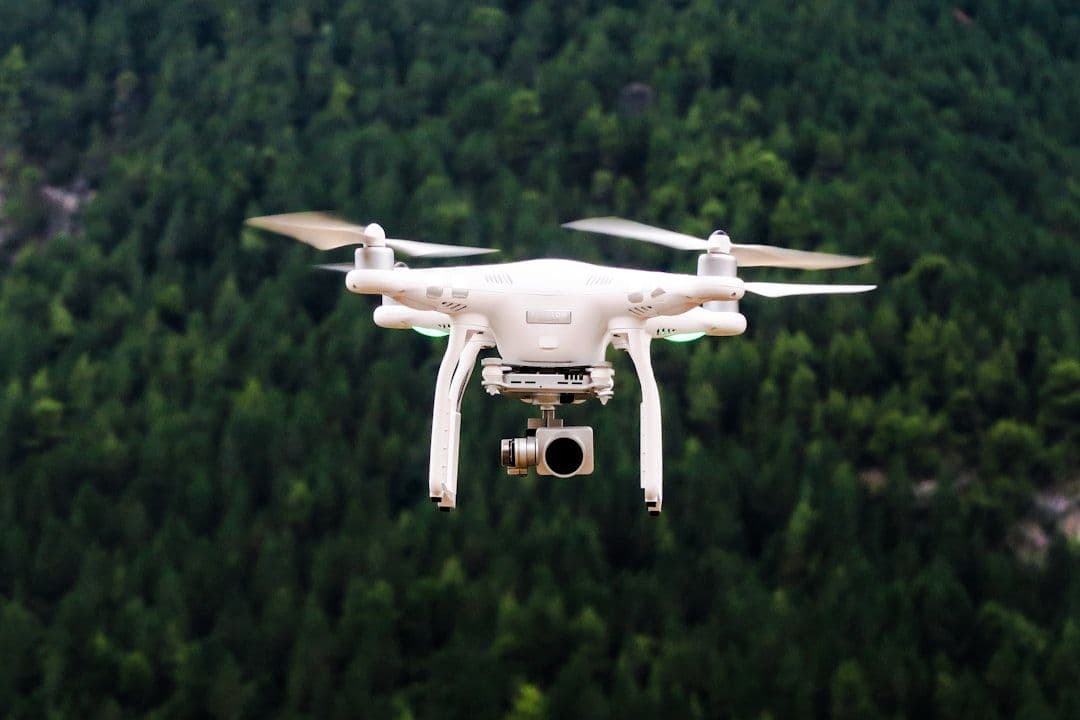
Picture this: a 911 call comes in. Before a single patrol car or fire engine moves more than a few blocks, a compact drone lifts off autonomously from a rooftop dock, reaches the scene in under two minutes, and begins streaming high-definition video to dispatchers and first responders en route. That's not a concept video — it's the operational model that BRINC Drones has been building, and a freshly closed $125 million funding round, backed in part by communications giant Motorola Solutions, signals the industry believes it's ready to scale.
What Is "Drone as First Responder"?
The Drone as First Responder (DFR) model flips the traditional emergency timeline. Rather than aerial support arriving late in an incident, a geographically distributed network of always-ready drones provides near-instant situational awareness the moment a call is dispatched.
The key infrastructure components are:
- Autonomous drone docks — weatherproof charging stations, typically mounted on rooftops or utility structures, that house drones ready for immediate deployment without a human pilot on site.
- Always-on connectivity — cellular or dedicated radio links that allow the drone to transmit live video and telemetry to dispatch centers the moment it launches.
- Computer-aided dispatch integration — software that ties drone deployment directly into existing 911 and CAD (Computer-Aided Dispatch) systems, so launching a drone can become as routine as sending an alert to a patrol unit.
BRINC's platform focuses heavily on this last layer: making drones a native part of emergency communications infrastructure rather than a bolt-on gadget operated by a specialist. Motorola Solutions' involvement is telling — the company already sits at the center of public-safety communications networks worldwide, and its strategic interest suggests DFR is being viewed as a genuine evolution of that infrastructure, not a novelty.
The Real Value: Situational Awareness Before Boots on the Ground
The operational case for DFR is straightforward. Emergency outcomes are strongly tied to how quickly responders understand what they're walking into. A live overhead feed answers critical questions in the first minute: How many people are involved? Is there an active hazard? Which access route is clear? Where should an ambulance stage?
For dispatchers, this means better-informed decisions before units even arrive. For first responders, it means arriving with context rather than walking blind into an unknown situation. For civilian bystanders, it can mean faster, more targeted help.
BRINC has specifically designed drones for close-quarters scenarios — including indoor operations — which sets it apart from many public-safety drone programs that rely on conventional quadcopters optimized for outdoor mapping and surveillance. Its hardware is built for structures: tight corridors, stairwells, and smoke-filled rooms where a typical enterprise drone would struggle.
The Technology Enabling It All
Making DFR reliable at scale requires more than capable hardware. Several converging technologies are pushing this vision from pilot program to citywide deployment:
Edge AI processing plays a growing role in reducing the burden on human operators. Rather than requiring a dispatcher to watch every second of a drone feed, onboard or ground-station AI can flag objects of interest — a stationary person, an open flame, a vehicle — in real time. Platforms like the NVIDIA Jetson AGX Orin represent the kind of high-performance, low-power compute that makes on-device inference practical in a drone or dock environment, enabling sub-second analysis without relying on a round-trip to the cloud.
Thermal and multi-sensor imaging dramatically expands what a drone can detect in poor conditions — smoke, darkness, or dense foliage. Enterprise-grade airframes like the Autel EVO Max 4T, which combines wide-angle, high-zoom, thermal, and laser rangefinder sensors in a single payload, illustrate the sensor density that professional public-safety applications now demand.
4G/5G Beyond Visual Line of Sight (BVLOS) operations remove the constraint of needing a licensed pilot to maintain visual contact with the aircraft, which is essential for automated dock-and-launch systems. Regulatory frameworks for BVLOS are still maturing in most countries, but momentum is building — and funding rounds of this size tend to accelerate that conversation with regulators.
Why Motorola's Backing Matters
Motorola Solutions is not a passive financial investor here. The company provides the radio infrastructure, body cameras, dispatch software, and communication hardware that most North American public-safety agencies depend on daily. Its participation in BRINC's round is a strong signal that drone feeds could soon be woven directly into that ecosystem — appearing in the same dispatch interfaces that operators already use, rather than requiring a separate drone management system running on a different screen.
This kind of vertical integration is what separates incremental adoption from systemic change. If a DFR alert appears in the same workflow as a radio dispatch, it stops being a "drone program" and becomes simply part of how emergency response works.
What Comes Next
The $125 million will likely go toward expanding BRINC's dock infrastructure across more municipalities, deepening software integrations with existing dispatch platforms, and accelerating the regulatory groundwork needed for routine BVLOS operations.
For the broader public-safety drone industry, the investment is a confidence signal. It suggests that after years of promising pilot programs, the DFR model is approaching the kind of operational maturity — and financial backing — needed for widespread deployment.
The technology to put a drone over a 911 scene in under two minutes already exists. The infrastructure to do it reliably, repeatably, and at city scale is what's being built right now.
Interested in enterprise drone platforms or edge AI hardware suited for inspection, monitoring, or autonomous operations? Contact our team to explore the right solutions for your application.
References
This article was drafted with AI assistance and reviewed before publishing.
Related reading
- DronesBeyond GPS: How Elsight's New Positioning Tech Could Transform Drone Navigation
- DronesEnd of an Era: The DJI Phantom 4 Pro V2.0 Is Being Retired — and What It Means for Aerial Photography
- DronesHow Faster FAA Airspace Clearance Is Changing the Way Emergency Drones Get Deployed
- DronesDJI Mini 5 Pro Fly More Combo: What the Sub-$1,000 Deal Actually Gets You