
Why Cleveland Clinic's Drone Prescription Program Is a Turning Point for Healthcare Logistics
By RobotWorld·8/5/2026
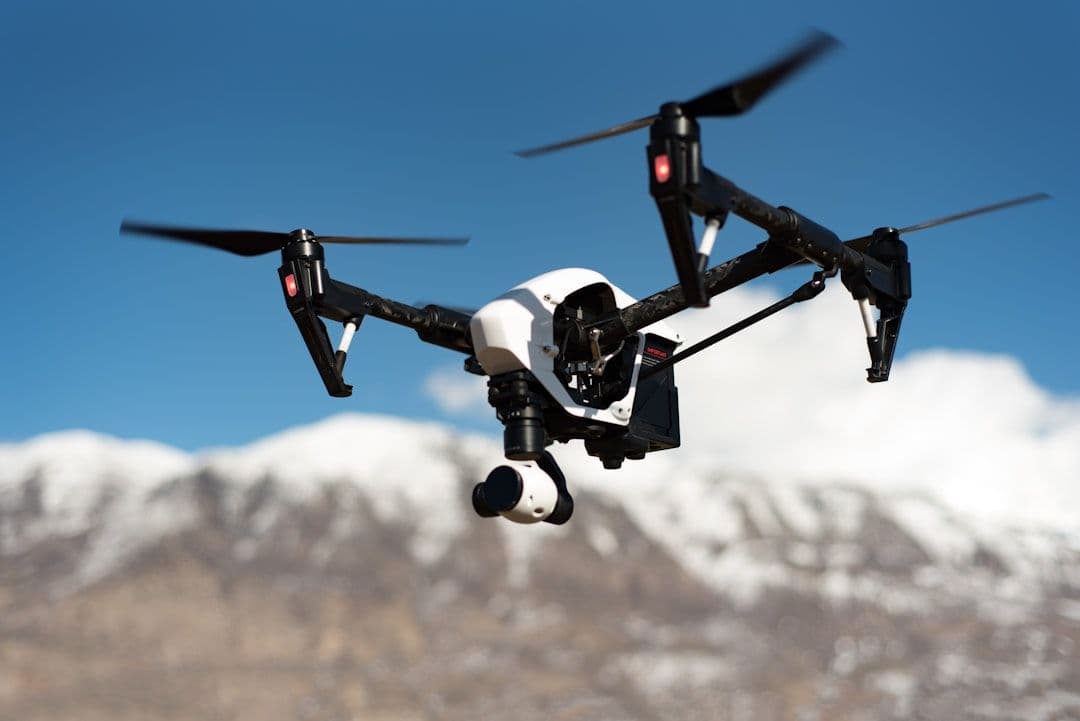
Drone delivery in the United States has quietly been maturing for years. Consumers in select cities can already have coffee, groceries, or household goods dropped at their doorstep from the air. But a new partnership between Cleveland Clinic and drone logistics company Zipline marks a meaningful leap: the first sustained, long-term medical drone delivery program launched by a US health system. Prescription medications are now being flown directly to patients in the Cleveland area — and the implications stretch well beyond one city.
From Novelty to Infrastructure
It's easy to dismiss drone delivery as a tech-world novelty, but what's unfolding in Cleveland is better described as logistics infrastructure. Unlike one-off pilots or limited demos, the Cleveland Clinic program is designed to run continuously, integrating drone delivery into the health system's standard patient care workflow. That distinction — long-term versus experimental — is what makes it significant.
For healthcare providers, the last mile of prescription delivery has always been a friction point. A patient discharged from a hospital, managing a chronic condition at home, or recovering from surgery may face delays getting critical medications. Traditional pharmacy fulfillment chains rely on physical pickups or ground couriers, both of which add time and depend on patient mobility. Drone delivery collapses that gap.
How Zipline's System Works
Zipline has built one of the more mature autonomous drone delivery platforms operating at scale globally, with deployments already running in parts of Africa, Asia, and the US. Their approach centers on fixed-wing or hybrid fixed-wing drones that can cover meaningful distances — far greater than typical multirotor consumer drones — and deliver packages via a controlled descent mechanism that lowers payloads gently to a target area without requiring the drone to land.
This design matters for medical logistics. Medications don't need to be placed on a pad; they can be lowered into a yard or designated delivery zone, minimizing the footprint required at the receiving end. The drones operate autonomously, guided by navigation software and real-time airspace awareness systems.
From a technical standpoint, this is where edge AI and onboard compute become critical. Autonomous drones navigating suburban and semi-urban environments must process sensor data, detect obstacles, and adapt flight paths in real time — all without constant reliance on a remote operator or cloud connectivity. The sophistication of onboard processors has advanced considerably, making this kind of reliable autonomy practical at commercial scale.
Why Healthcare Is a Natural Fit
Of all the use cases for drone delivery, pharmaceuticals are particularly well-suited to the format. Medications are:
- Lightweight — most prescription packages are small and weigh only a few hundred grams, well within payload limits
- Time-sensitive — delays in receiving medications can have real health consequences
- High-value per trip — the cost-per-delivery math works better when the cargo matters
- Private — drone delivery to a home address can be more discreet than in-store pickup for certain prescriptions
Cleveland Clinic's patient base includes people managing complex, ongoing conditions — exactly the population that benefits most from reliable home delivery rather than making repeated trips to a pharmacy.
Regulatory and Airspace Context
None of this happens in a regulatory vacuum. The Federal Aviation Administration (FAA) has been cautiously expanding the framework for Beyond Visual Line of Sight (BVLOS) drone operations — the operational mode required for practical delivery routes. Zipline and other commercial operators have worked within FAA waivers and approvals to establish these corridors.
The Cleveland Clinic program represents a real-world data point that regulators, insurers, and other health systems will be watching. If the program demonstrates a strong safety record, consistent delivery performance, and measurable patient benefit, it builds the case for broader adoption across US healthcare.
What This Means for the Broader Drone Industry
The healthcare sector's entry into routine drone logistics sends a signal to the broader industry: autonomous aerial delivery is no longer speculative. When a globally recognized institution like Cleveland Clinic commits to a long-term program, it validates the technology in a high-stakes context where reliability is non-negotiable.
For drone hardware and AI platform developers, this creates clear demand signals. Enterprise drones capable of autonomous navigation, robust onboard sensing, and all-weather operation are increasingly relevant not just for inspection or mapping — the traditional enterprise use cases — but for logistics networks that need to function day in, day out. Platforms like the Autel EVO Max 4T, with its multi-sensor payload and enterprise-grade design, illustrate how far drone hardware has come in terms of sensing capability and operational reliability, even if delivery-specific platforms like Zipline's tend to be custom-built for their missions.
Looking Ahead
The Cleveland Clinic and Zipline partnership is unlikely to remain an isolated case for long. Health systems across the country are watching. The combination of an aging population, rising demand for home healthcare services, and maturing drone technology creates strong incentives to expand programs like this into new cities and new types of medical cargo — from lab samples to medical devices.
For patients, the promise is simple: faster access to the medications they need, delivered safely and directly to their door. For the drone industry, it's confirmation that autonomous aerial logistics has found one of its most compelling real-world applications yet.
Interested in enterprise drone platforms for inspection, logistics, or research applications? Explore RobotWorld's range of professional drone hardware or get in touch with our team to discuss the right solution for your use case.
References
This article was drafted with AI assistance and reviewed before publishing.
Related reading
- DronesBeyond GPS: How Elsight's New Positioning Tech Could Transform Drone Navigation
- DronesEnd of an Era: The DJI Phantom 4 Pro V2.0 Is Being Retired — and What It Means for Aerial Photography
- DronesHow Faster FAA Airspace Clearance Is Changing the Way Emergency Drones Get Deployed
- DronesDJI Mini 5 Pro Fly More Combo: What the Sub-$1,000 Deal Actually Gets You