
DJI Neo Hits a Record Low Price — But a Tariff Clock Is Ticking
By RobotWorld·9/5/2026
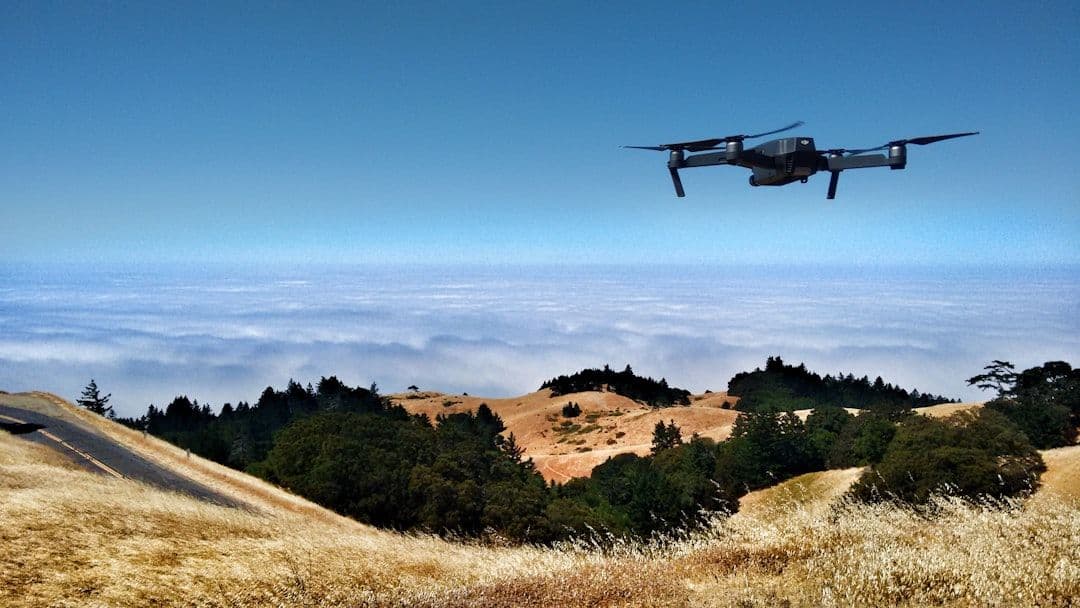
There's a peculiar kind of urgency building around one of DJI's most beginner-friendly drones. The DJI Neo has quietly dropped to its lowest price point yet — making it more accessible than it has ever been — while simultaneously, the broader trade environment is shifting in ways that could make drones like this noticeably more expensive in the near future. It's a rare convergence of good timing and bad timing at once.
What Is the DJI Neo, and Why Does It Stand Out?
The DJI Neo occupies a unique space in the consumer drone market. It's a palm-sized, fully guarded drone designed to be approachable for people who have never flown before. You can launch it directly from your hand — no flat surface, no controller required for basic shots. Its propeller guards make it one of the safer options to fly indoors or in tight outdoor spaces, and its subject-tracking "follow-me" capability means it can autonomously frame and follow a moving person with minimal pilot input.
That combination — physical safety, autonomous tracking, and near-zero learning curve — is what has made the Neo a standout product for content creators, fitness enthusiasts, and families looking to capture outdoor moments without the stress of learning to pilot a traditional drone. It won't replace a professional rig, but it genuinely lowers the barrier to aerial video in a way that few drones before it have managed.
What's Happening With the Price?
The Neo reaching a record low isn't an accident. Consumer electronics pricing tends to follow predictable patterns: as a product matures and newer hardware enters a lineup, retailers discount existing inventory. The Neo has been on the market long enough for this cycle to play out. For buyers, that normally translates to a simple "wait for a sale" strategy.
The wrinkle right now is tariffs. New and proposed tariff structures — particularly those targeting goods manufactured in China — have cast a shadow over the drone market. DJI assembles the vast majority of its products in China, meaning any significant import duties will almost certainly flow through to retail prices. The industry has already seen this dynamic play out with other electronics categories: what starts as a trade-policy adjustment ends as a higher sticker price for the end consumer.
The result is an unusual window: a product at peak affordability, with meaningful upward price pressure potentially arriving in the not-too-distant future.
The Broader Drone Market Context
The tariff uncertainty isn't limited to the Neo. It touches essentially every drone at every price point in DJI's lineup — from the ultra-light DJI Mini 4K and the obstacle-sensing DJI Mini 4 Pro, to the creator-focused DJI Flip and the immersive FPV experience of the DJI Avata 2. Professional and enterprise platforms are not immune either.
For buyers who have been sitting on the fence about any of these, the calculus has shifted. The question is no longer just "what's the right product for me?" but also "will this cost more if I wait?"
It's also worth noting that the situation creates an opening for non-Chinese drone manufacturers. The Autel EVO Max 4T, for instance, is a purpose-built enterprise drone that has already attracted buyers in sectors where sourcing from DJI is restricted. Tariff pressure could accelerate interest in alternatives across both consumer and commercial segments.
What Should Buyers Actually Think About?
If the DJI Neo is genuinely the product you want, the current pricing environment provides a concrete reason not to delay. Here's a quick framework for thinking it through:
- Use case fit: The Neo is purpose-built for casual, personal content creation. If you need professional-grade video, long range, or obstacle sensing, look at the Mini 4 Pro or Flip instead.
- Regulatory awareness: Even lightweight, guarded drones are subject to local airspace rules. Check your country's registration and operational requirements before flying.
- Ecosystem commitment: DJI's app, accessories, and repair ecosystem are mature. Buying into that ecosystem now, at a lower price, has compounding value.
- Urgency is real but not absolute: Record lows and tariff timelines aren't perfectly synchronized. Prices may not spike overnight, but the directional pressure is clear.
A Moment of Rare Convergence
It's uncommon for a genuinely useful piece of technology to hit its price floor precisely when external forces are building to push prices upward. Whether that alignment lasts weeks or months is impossible to say with certainty — tariff implementation timelines have a way of shifting. But what is clear is that the DJI Neo today represents better value than it did at launch, and better value than it may represent a year from now.
For anyone who has been curious about getting into aerial photography without complexity or significant financial risk, that's a meaningful signal worth acting on.
Interested in exploring DJI's current lineup? Browse the DJI Neo, DJI Mini 4 Pro, and DJI Flip on RobotWorld, or reach out to our team for a product recommendation tailored to your needs.
References
This article was drafted with AI assistance and reviewed before publishing.
Related reading
- DronesHow Drone Detection Software Actually Works — and Why Updates Matter
- DronesBeyond GPS: How Elsight's New Positioning Tech Could Transform Drone Navigation
- DronesEnd of an Era: The DJI Phantom 4 Pro V2.0 Is Being Retired — and What It Means for Aerial Photography
- DronesHow Faster FAA Airspace Clearance Is Changing the Way Emergency Drones Get Deployed