
Why AVSS's Production Record Signals a Turning Point for the Commercial Drone Industry
By RobotWorld·7/13/2026
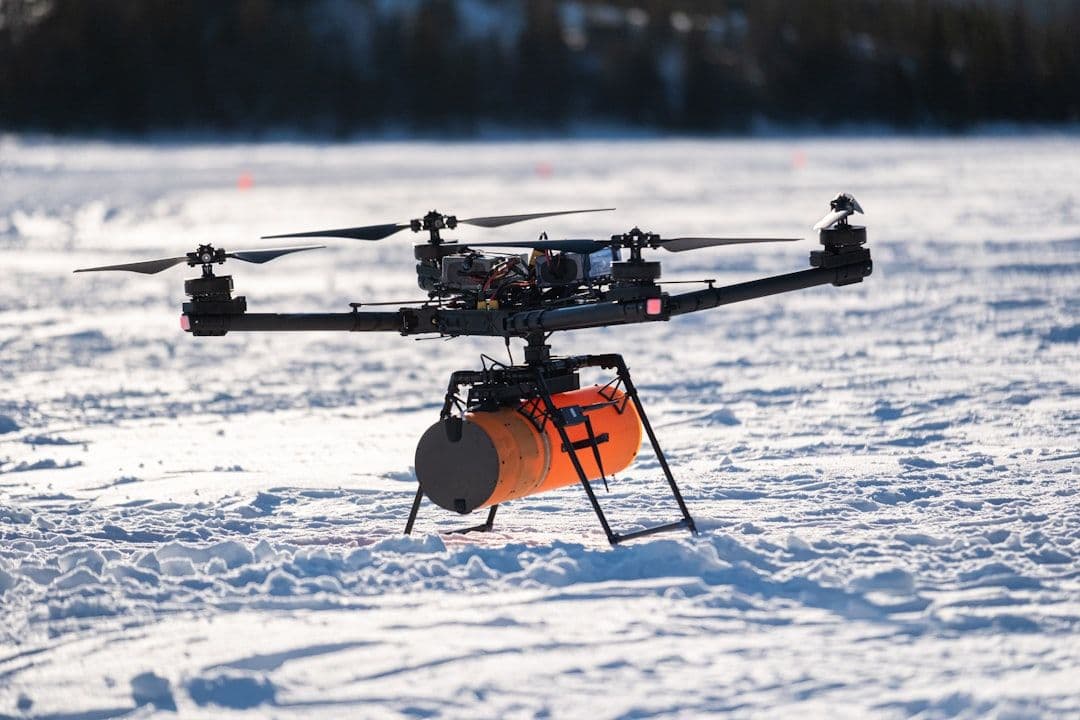
Canadian drone manufacturer AVSS recently announced a milestone that would have seemed ambitious just a couple of years ago: the company has already manufactured more than 2,000 drone components and systems within a single fiscal year — exceeding its cumulative output from the entire prior year, with several months still remaining on the calendar. For anyone tracking the trajectory of commercial UAS (unmanned aerial systems), this isn't just a company story. It's a window into a much broader industrial shift.
From Niche Hardware to Scalable Production
For most of its existence, the commercial drone sector has operated in a kind of artisanal mode — small production runs, highly customized hardware, and long lead times that made scaling difficult. Companies often built units to order rather than to stock, treating each drone or drone system almost like a bespoke piece of equipment.
AVSS's output jump breaks from that pattern. Crossing the 2,000-unit threshold mid-year is meaningful not just as a headline number, but as evidence that drone manufacturers are beginning to operate with the kind of production discipline more commonly associated with automotive or consumer electronics supply chains. Tooling, sourcing, quality control, and assembly workflows are maturing rapidly.
This shift has been years in the making, driven by a confluence of factors: clearer regulatory frameworks in major markets, growing enterprise adoption across sectors like logistics and agriculture, and improvements in the underlying component ecosystem that make it easier to design for manufacturability from the outset.
What's Fueling Global Drone Demand?
The demand side of the equation is equally instructive. Several industries are moving from drone pilots and proofs-of-concept to genuine operational deployments at scale.
Logistics and last-mile delivery represent one of the highest-growth verticals. As drone delivery corridors receive regulatory approval in more jurisdictions, the appetite for reliable, producible platforms is intensifying. Operators can't build networks on prototypes.
Agriculture is another major driver. Autonomous crop-spraying and field-monitoring drones — like those exemplified by platforms such as the DJI Agras T50 — are replacing or augmenting traditional equipment on farms across Asia, Latin America, and increasingly North America and Europe. As adoption spreads, the volume of units required grows substantially.
Inspection and surveying work has also reached a tipping point. Infrastructure managers — from utilities to telecoms to construction firms — are standardizing drone-based workflows for tasks that once required expensive crewed aircraft or dangerous manual access. Compact enterprise platforms like the DJI Mavic 3 Enterprise and the Autel EVO Max 4T illustrate how capable, multi-sensor payloads in portable airframes are enabling this transition.
The Supply Chain Equation
Hitting production records requires more than ambition — it demands a robust and responsive supply chain. One of the persistent vulnerabilities in the drone industry has been component availability: motors, ESCs, flight controllers, communication modules, and increasingly, edge AI compute hardware.
This last category is particularly telling. Modern commercial drones are no longer just flying cameras. They carry onboard inference engines capable of real-time object detection, terrain mapping, obstacle avoidance, and autonomous decision-making. Hardware like the NVIDIA Jetson AGX Orin 64GB — capable of delivering up to 275 TOPS of edge compute — represents the kind of processing muscle increasingly embedded in professional-grade drone platforms, enabling complex AI workloads to run entirely onboard without reliance on ground-based compute or cloud connectivity.
For manufacturers, securing consistent access to these components at volume is a genuine operational challenge. Companies that solve this problem — through supplier relationships, design flexibility, or strategic inventory — gain a meaningful competitive edge.
Scaling Without Sacrificing Quality
There's an important tension in any rapid production scale-up: maintaining quality and reliability as throughput increases. In the drone industry, this matters enormously. A hardware failure in a logistics drone doesn't just create a customer service issue — it can mean a lost payload, a regulatory incident, or worse.
AVSS's reported milestone suggests the company has found ways to scale without regressing on quality — a non-trivial engineering and operational achievement. For the broader industry, this serves as a useful benchmark and a challenge: as demand grows, the companies that will capture the market aren't just those with the best aircraft design, but those with the most disciplined manufacturing operations.
What This Means for Enterprise Buyers
For organizations evaluating drone procurement, the AVSS story offers a few practical takeaways. First, lead times should be shortening for mature platform types as more manufacturers achieve production scale. Second, the vendor landscape is consolidating around companies that can demonstrate not just product capability but supply reliability. Third, the window to build operational expertise — before competitors do — is narrowing.
Whether your use case is precision agriculture, infrastructure inspection, or logistics, now is the time to move from experimentation to systematic deployment. The industry's supply chain is catching up to the ambition.
Interested in exploring drone or edge AI hardware for your operations? Browse FrontierTech Hub's full catalog or reach out to our team for a tailored recommendation.
References
This article was drafted with AI assistance and reviewed before publishing.
Related reading
- DronesBeyond GPS: How Elsight's New Positioning Tech Could Transform Drone Navigation
- DronesEnd of an Era: The DJI Phantom 4 Pro V2.0 Is Being Retired — and What It Means for Aerial Photography
- DronesHow Faster FAA Airspace Clearance Is Changing the Way Emergency Drones Get Deployed
- DronesDJI Mini 5 Pro Fly More Combo: What the Sub-$1,000 Deal Actually Gets You